Noticing hair more frequently than usual on the pillow, hairbrush, or swirling down the shower drain can be concerning.
Many individuals assume such events are hair fall instances, but that might not be the case. The hair cycle naturally goes through the growth, resting, and shedding phases. Normally, losing 50-100 hair strands regularly is common. Losing more hair strands indicates Excessive Hair Shedding. Such conditions can appear as temporary events which go away in time. If hair stops growing permanently, hair loss is concerning and requires medical attention.
Understanding the key difference between hair shedding and hair fall enables one to notice the early symptoms, diagnose the underlying cause and opt for an informed decision to support healthier and fuller hair.
Hair Shedding vs Hair Loss: The Key Difference
Hair Shedding
Hair’s shedding is a normal part of the hair cycle. Losing more than 100 hair strands regularly leads to excessive hair shedding. The appearance of such a condition is medically termed telogen effluvium. It accounts for rapid hair shedding that occurs temporarily due to hormonal fluctuations or stress. The hair cycle consists of three distinct phases: anagen (growth), catagen (resting), and telogen (shedding). A change in the body’s intrinsic balance pushes approximately 70% of the hair prematurely from the anagen phase to the telogen phase.
Hair Fall
Hair fall is a critical condition in which new hair stops growing or grows more slowly. The medical term representing the condition is anagen effluvium. The condition arises from acute injury to the hair follicle caused by an endogenous or exogenous factor. It leads to structural damage and worsens diffuse alopecia. Cell division in the hair matrix gets significantly disrupted, resulting in narrower hair at the base. This makes hair susceptible to breakage above the keratinization zone. A necro matrix is formed with melanin, keratin or inner root sheath that extrude the follicular opening.
*NOTE: Hair shedding vs Hair fall are distinct conditions that require understanding the underlying causes and adaptation of adequate treatment.
What Causes Excessive Hair Shedding?
Hair Shedding Involves Both Internal and External Factors. Excessive Hair Shedding Occurs in the Presence of the Following Stressors:
- Excessive weight loss suddenly
- Pregnancy or childbirth
- Psychological stress accompanied by emotional turmoil
- Nutritional deficiencies
- Medical conditions like an operation, certain medication or recovery from illness
- Sessional hair shedding
*Among the majority of individuals experiencing excessive hair shedding, the condition is reversed after the stressful events are over. If the stressor persists for an extended period, hair shedding becomes a concern.
When Hair Loss Is a Concern?
The Common Causes of Hair Loss Include:
- Hereditary Hair Loss/Pattern Hair Loss: The medical term is androgenetic alopecia, which leads to excessive Hair Shedding in Men and women. The condition appears due to androgen overinfluence
- Autoimmune Reaction: Alopecia areata, where an individual’s immune system attacks hair follicles as foreign
- Medical Condition: A reaction due to certain medications or chemotherapy leads to the destruction of the hair follicle
- Hairstyling: Prolonged use of heat, pulled hairstyles, harsh chemical products, etc.
*Hair loss signifies a serious concern and requires active dermatological intervention.
Is It Hair Shedding or Hair Loss?
Both Hair Shedding and Hair Loss Involve the Loss of a Hair Strand. However, How the Scalp is Affected is Distinct.
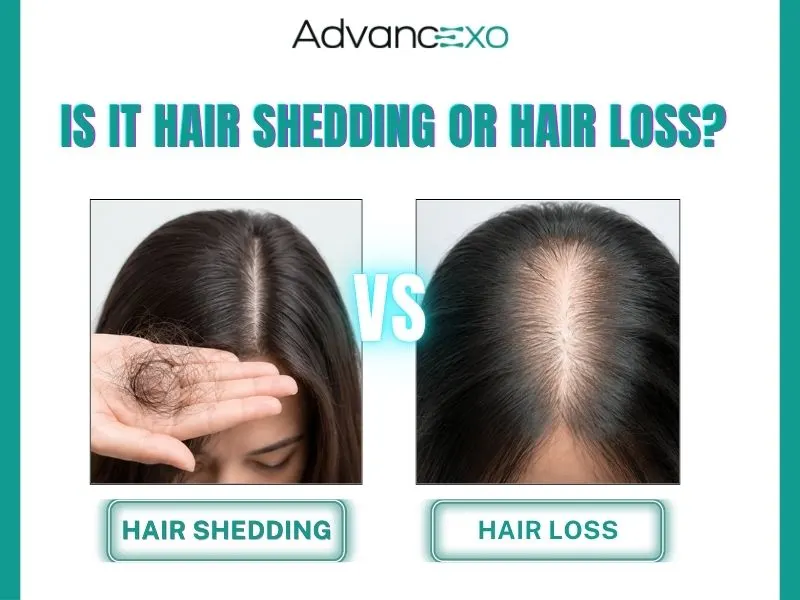
Table: Difference between Hair Shedding and Hair Loss
| Sign | Hair Shedding | Hair Loss |
| Hair Density | Overall volume is maintained | Hair gradually appears thinner |
| Hairline/Parting | Hair line remains intact | Receding hair lines, scalp become more visible, widened part |
| Thinning at crown | Uncommon/ Temporary | Persistant |
| Duration | 2-6 months, goes away on reversal of the condition | Persists for months/years, progresses without appropriate treatment |
| Hair Regrowth | Hair follicle is healthy, natural hair growth is possible | Hair follicle get miniaturized, goes in dormant stage |
| Cause | Stress, illness, hormonal fluctuations, nutritional deficiencies | Hereditary/ Genetic cause, Autoimmune reaction, Scarring |
| Treatment | Addressing underlying triggers reverse the condition | Requires adequate diagnosis, targeted medication or regenerative approach |
What Treatments are Available for Excessive Hair Shedding?
Excessive Hair Shedding Requires Comprehensive Dermatological Attention. Hair Shedding Treatment Includes:
Medication
- Over-the-counter (OTC) medications include biotin, collagen, zinc, azelaic acid, and natural tree oils.
- Minoxidil, topical solution recommended for Hair Shedding in Men
- Finasteride, recommended for patterned baldness in women and men
- Corticosteroids, prescribed for sudden hair loss
Grafting
- Surgical procedure, involves surgeon removing part of the hair from the body and transplanting it to the target site
- Involves an outpatient procedure, generally painful
- Involves anaesthesia for pain minimization
- Downtime is from several days to a week
Light Therapy
- Use of low-level laser therapy at the targeted scalp site
- Light stimulates the hair follicle, promoting hair growth
- Take several sessions to show the potential outcome
Platelet-Rich Plasma (PRP)
- Involves the withdrawal of an individual’s blood and centrifuging
- Plasma-rich platelets are injected at the target site
- Rich source of growth factors, it stimulates cellular signalling and promotes hair regrowth
- The quality and concentration of growth factors depend on an individual’s health
- Generally requires repetitive and frequent sessions for outcome and maintenance
Exosomes
- Regenerative particles secreted by stem cells that act as cargoes
- Carries proteins, microRNAs, cytokines, growth factors, and signalling molecules
- Activates dormant hair follicles, reduces low-grade scalp inflammation, modulates immune response and creates a supportive microenvironment
- Addresses the underlying cause of hair fall, producing a long-term solution with effective management
*NOTE: Dermatologists often recommend exosomes in combination with other hair fall treatments as a supportive approach.
Why Have Exosomes Become a Popular Choice?
Exosomes are tiny, nanosized particles that possess regenerative potential. Dermatologists and researchers are relying on exosome applications for excessive Hair Shedding or severe hair loss. It can potentially reverse all non-scarring causes of hair shedding. The procedure is minimally invasive and produces long-term solutions. They undertake the following mechanism of action:
- Regeneration: Exosomes secrete various cytokines and growth factors that promote hair follicles’ transition from telogen to anagen. It rejuvenates hair follicles and supports hair regrowth
- Repair: Exosomes boost cellular communication and activate the body’s natural repair mechanism. It creates a supportive scalp microenvironment to support hair regrowth
- Anti-Inflammation & Immunomodulation: Exosomes secrete various anti-inflammatory molecules (e.g., IL-6, IL-10) that neutralise pro-inflammatory signalling. They modulate immune response and prevent immune response-mediated follicular damage.
*NOTE: The outcome of the exosome application depends on its quality, source, isolation procedure, and the individual’s response. Advancexo, India, is a leading clinical-grade exosome supplier for hair and skin rejuvenation. The exosome vials come with a Certificate of Authentication (CoA).
When Should One Visit a Dermatologist?
- Excessive hair shedding >3 months
- Hair receding or thinning patches on the scalp
- An individual with a family history of hair loss
- Hair shedding accompanied by other health concerns
Conclusion
Hair shedding vs hair fall comes with unique signs and symptoms. Understanding the distinct feature is crucial in opting for adequate treatment. Early diagnosis of the cause of hair shedding and opting for adequate Hair Shedding Treatment are key to preventing premature hair fall. With the emergence of regenerative approaches, such as the use of exosomes, targeting hair fall causes and promoting hair rejuvenation is possible.
FAQ’s
Q- How Much Hair Shedding is Normal?
Normally, losing 50-100 hair strands daily is a normal part of the hair cycle. Losing more hair for a longer time accounts for dermatological concerns.
Q- Can Excessive Hair Shedding Reverse On Its Own?
Hair shedding due to temporary causes potentially gets reversed. Such cases include psychological stress, hormonal fluctuation, nutritional deficiencies or certain medications. However, excessive hair shedding due to hereditary or immune causes requires dermatological intervention.
Q- How Long Does Excessive Hair Shedding Usually Last?
Temporary excessive hair shedding may last a few months (3-6 months). However, hair shedding accompanied by adequate hair regrowth is a concern.
Q- What is the Most Effective Hair Shedding Treatment for Temporary Hair Fall?
Dermatologists recommend addressing nutritional deficiencies, hormonal fluctuations, medications, and hair products to help prevent hair shedding. Moreover, OTC medications like biotin, collagen, zinc, and natural tree oil also help.