How Exosomes Are Transforming Hair Restoration?
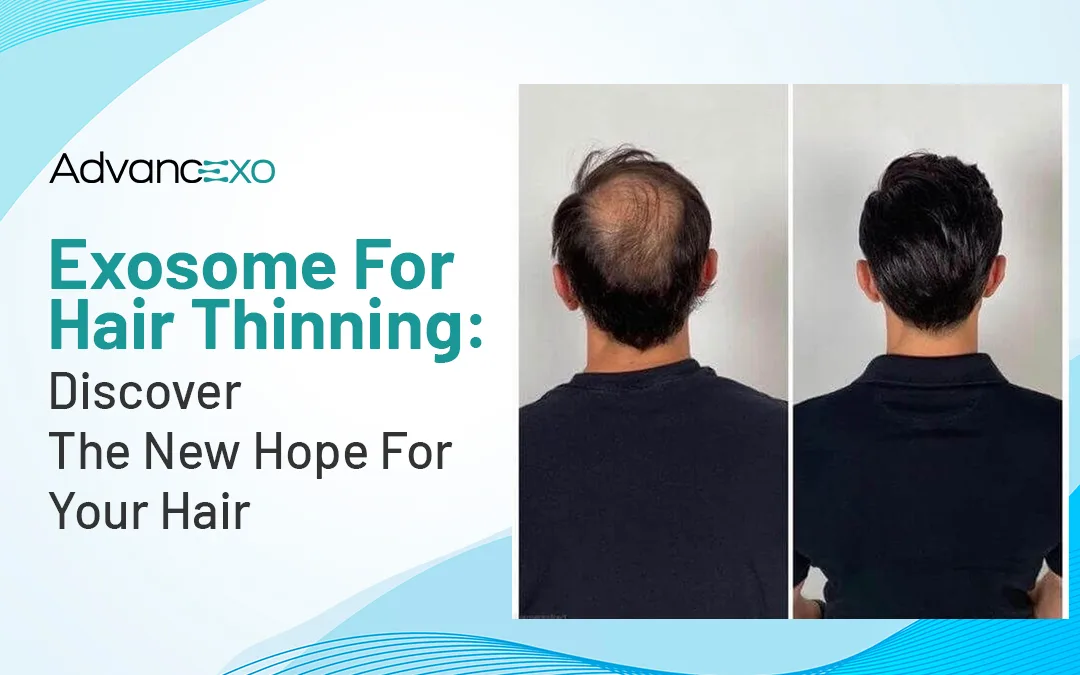
Struggling with rapidly losing hair stands or weak hair follicles? Exosome for hair thinning is an advanced solution for hair restoration, promoting hair regrowth and introducing a healthier scalp.
The experience of Exosome for Hair Thinning is distinct among individuals. Usually, an individual sheds 50-100 hair strands regularly. Losing more strands is a matter of concern. Hair thinning creates a sparser spot of hair on your scalp. It may or may not result in complete baldness.
Factors Leading to Hair Thinning?
Thinning of hair occurs due to multiple causes, including lifestyle factors or genetics, or medical conditions. Some major factors include:
- Hair Treatment: Overtreating hair or using harsh hair products, e.g., colors, relaxers, perms, gels, etc.
- Nutrient Deficiencies: Lack of specific dietary nutrients, e.g., Folic acid, Iron, biotin, Vitamin D, etc.
- Chronic Stress: Stress upregulates hormones like cortisol that lead to conditions like telogen effluvium, leading to hair fall.
- Genetic Factors: Family history of hair fall, androgenetic alopecia
- Medical Conditions: Pregnancy, treatment associated with autoimmune disease, immune deficiencies, skin disorder or infections
Exosomes: A Breakthrough in Regenerative Medicine
Exosomes for hair growth have gained immense attention in the aesthetic industry. Umbilical cord-derived mesenchymal stem cells (UC-MSCs) are intensely researched as a potential option in hair loss treatment. Owing to the regenerative and immunomodulatory properties, exosomes promote hair growth from within.
The underlying mechanism by which exosomes promote hair regrowth involves:
- Hair follicle activation: exosomes stimulate dormant hair follicles and push them into anagen (growth) phase
- Angiogenesis: Exosome promotes the development of new blood vessels. Increases blood flow supply to the hair follicles and promotes hair growth
- Immune response modulation: exosomes intrigue immunomodulatory properties that regulate immune response. Creates a supportive scalp microenvironment
- Promotes cell-to-cell communications: Delivers growth factors, cell signalling molecules, and microRNAs. Influences cellular processes like proliferation, differentiation and survival for hair growth
Are Exosome and Stem Cell Therapy the Same?
Exosome and stem cell therapy for hair regrowth are often confused.
You must understand the basic difference to make a sound decision before choosing regenerative hair treatment options. Both exosomes and stem cells are indeed part of regenerative medicine, but they have distinct roles.
Stem cells are undifferentiated cells. They possess the ability to differentiate into distinct cell lineages. The therapy involves the introduction of whole cells that possess self-renewal properties. Stem cells focus on replacing the damaged or dead cells.
Exosomes are nano-sized extracellular vesicles that are packed with essential proteins, growth factors, microRNAs and lipids and promote cellular communication. Exosomal therapy enables cell-free treatment, and the chances of immune rejection are minimal.
Mode of Action
Exosomes have strong therapeutic potential. The mode of action can involve various mechanisms:
- Hair regrowth: Exosomes release growth factors, cytokines, and signaling cellular molecules. This promotes activation of hair follicles
- Revascularization and Angiogenesis: Release pro-angiogenic and angiogenic growth factors (VEGF, PDGF, FGF, HIF-1α)
- Hair growth cycle regulation: Pushes the dormant follicle towards the growth phase
- Anti-inflammation: Releases anti-inflammatory molecules (miRNAs, cytokines, proteins), reduces scalp inflammation
- Improves scalp circulation, oxygenation and follicle nourishment
Who are the Ideal Candidates?
Exosome Treatment for Hair Restoration is promising for candidates, including:
- Experiencing early-stage androgenetic alopecia
- Have alopecia areata
- Postpartum
- Hair thinning due to hormonal imbalance or stress
- Failed after opting for conventional treatment
- Seeking for non-surgical hair transplantation option
*NOTE: Decision must be made based on an individual’s medical records. Dermatologists assess a patient’s specific needs and expectations to determine the most suitable process.
Procedure
Exosomes Hair Treatment is a multi-step process. The underlying procedure includes: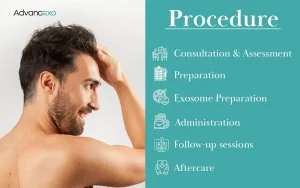
- Consultation & Assessment: Dermatologists assess a patient’s scalp and determine the severity of hair loss. Consider other medical conditions. Conducts specific tests like complete blood count, urinalysis
- Preparation: The targeted area of the scalp is prepared. The area of the scalp is cleaned, followed by the topical application of numbing cream
- Exosome Preparation: Exosomes extracted from MSCs, tested for the presence of infection or other cross-contamination
- Administration: Dermatologist determines adequate administration route (microneedling, fine-gauge needle, topical application). Administration of exosomes through the determined route.
- Aftercare: Following exosome hair treatment, adequate aftercare is essential to gain optimal results. Some important aftercare includes avoiding harsh chemical or hair care products and direct sun exposure for 24 – 48 hours
- Follow-up sessions: Depending on the symptoms, the dermatologist determines the number of sessions. Typically, 2-4 sessions are recommended; the number of sessions depends on the patient’s improvement status.
Advantages in Clinical Implications
Exosome Treatment for Hair Restoration brings several advantages in clinical application:
- Cell-free strategy for regenerative medicine, with no risk associated with live cell transplantation
- Act through paracrine signally, no dependency for cell engraftment and survival
- Delivers bioactive molecules (essential proteins, microRNAs, cytokines, chemokines, lipids) to the dormant hair follicle, boosting follicular stem cell growth
- Exosomes are acellular, with minimal risk of immunogenicity.
- Consistency in manufacturing and scalability (standardization of particle size, cargo composition, concentration)
Translational Challenges in Exosome-Based Hair Regeneration
Despite several clinical advantages, there are specific challenges, including:
- Scalp-dependent factors influence cellular uptake
- Limited long-term clinical trial outcome
- Variability in outcome post-treatment
- The quality of exosomes, the isolation source, or the laboratory condition influences the quality of exosomes
What Should be Kept in Mind Before Choosing the Therapy?
- Choose Renowned Clinic
- Consult Experienced Clinicians
- Superior quality (GMP-certified) exosomes
- Gather elaborative information- Treatment procedure, possible side effects, alternative, complete cost for overall treatment
Exosomes Hair Treatment in India
India is booming in the area of delivering Exosomes for Hair Loss globally. The presence of strong infrastructure for medical tourism, a growing biotech sector, and experienced clinicians enables the delivery of exosome therapy at a lower cost. Some of the popular clinic in India that provides exosome hair treatment include:
- ISAAC Luxe Clinic
- Clinic Dermatech
- Alive Wellness
- Dr. Sheth’s Skin & Hair Clinic
- Blush Clinic
Advancexo, India, is one of the leading research laboratories that deals with exosome research. The laboratory isolates and maintains GMP-certified exosomes.
Conclusion
Exosomes Hair Treatment is a New Hope to combat hair thinning. The major takeaways include:
- Cell-free regenerative approach
- Modulates key molecular signalling pathways, triggers follicle stem cells activation.
- Long-lasting biological effect
- Minimal chances of immune rejection
- Consistency in isolation, characterization and quality control improves consistency and result reproducibility.
- Clinical outcomes depend on patient-specific factors, product quality and delivery strategy.
- Patients are recommended to make informed choices- guided by scientific evidence, regulatory compliance, and realistic expectations
FAQ’s
Q- How are exosomes different from stem cells?
Exosomes are tiny vesicles that consist of various active biomolecules (proteins, growth factors, cytokines, chemokines, microRNAs, lipids). Stem cells are undifferentiated cells that have the ability to differentiate into distinct cell lineages.
Q- Can exosome hair treatment be effective in hair thinning?
Yes, exosome hair treatment is effective for hair regrowth. However, the outcomes depend on factors like the patient’s health condition, cause of hair thinning, exosome quality, etc.
Q- Is exosome treatment for hair restoration safe?
Yes, exosome treatment for hair restoration is relatively safe. It lacks any nuclear DNA, hence possesses minimal immunogenic and tumorigenic risk. Although exosome quality is essential, it depends on the cell source and adherence to clinical protocols.
Q- How many sessions are required for Exosomes Hair Treatment?
The exact number of sessions depends on the patient’s specific needs. Generally, 2-4 sessions are recommended.