

Melasma: It’s More Than Just Dark Patches
‘Melasma’ or ‘dark bluish to grey patches’ lingers longer than you’d like. In brownish to darker skin, the effect is prominent; small triggers leave stubborn marks.
Exosome treatments have not only gained attention for skin-related issues, but they are actively transforming the aesthetic medicine landscape. Melasma Treatment for Dark Skin or brown skin isn’t just difficult- it actively requires balancing between fading pigment and preventing recurrence. With this, many wonder if exosome for melasma truly offers something different or if it is just a big promise.
Hereby, let’s unveil secrets behind exosomes and set realistic expectations without falling for overpromising trends.
Why Is Melasma So Hard to Treat?
We know you hate dark, stubborn patches that just do not leave. The disappearance is really difficult because the condition is hard to modify. The major factors include sun exposure, hormonal imbalance and skin type (brown to dark skin is more prone). Indian skin is more prone to melasma as most of them fall between Fitzpatrick scale Type III to VI (skin colour light brown to dark pigmented). This means a higher concentration of melanocytes and more melanin. Well, this sounds good for sun protection, but it is more likely to develop obstinate dark spots with tiny acne or cuts. Even after the acne goes away, the spots persist (post-inflammatory hyperpigmentation (PIH). PIH relatively triggers melasma. The treatment becomes frustrating to both patients and cosmetic dermatologists.
Spotting Melasma: What You Should Know at First?
- In the Mirror: Patchy symmetrical appearance, appears most prominent in a light setting/sunset, difficult to cover with makeup.
- Affected Area: Cheeks, forehead, jawline, upper lip, nose
- Cause: Hormonal Imbalance (Mask of pregnancy), antiseizure medication, contraceptive/ birth control pills, genetic factor, photoxic drugs, UV exposure (direct sun or tanning beds)
- Diagnosis: Severity measured by Melasma area and severity index (MASI)
- Treatment: Broad-spectrum sun protection, reduce pigmentation and address triggers
- Treatment Ease: Difficult to extremely difficult
What Makes Melasma Treatment for Dark Skin Difficult?
Melasma Treatment for Dark Skin Face Substantial Challenges Due To:
- Recurrence: Sun exposure is common in topical climate. Melasma treatment is a long-term commitment for patients. Fluctuation in estrogen and progesterone levels is a common condition among females. In male, low testosterone level/hypogonadism and high estrogen level cause melasma. Hormonal fluctuation is more common in female comparatively
- Appears at Different Skin Layers: Pigmentation affects different skin layers. The deeper the pigmentation occurs more difficult it is to treat
- Regular Sun Exposure: Direct sun exposure exacerbates the condition, and it is very difficult to avoid even with proper sun protection
- High Risk of PIH and Active Melanocytes: Brown or dark skin has a higher concentration of melanocytes. It is more prone to irritation and PIH. The injuries are common, leaving a prominent spot on a distinct facial area.
What are Common Melasma Treatments?
Common Melasma Treatments in India recommended by a dermatologist includes:
- Broad-Spectrum Sunscreen: Regular use of premium high SPF (> 30). Maintenance is a tedious task
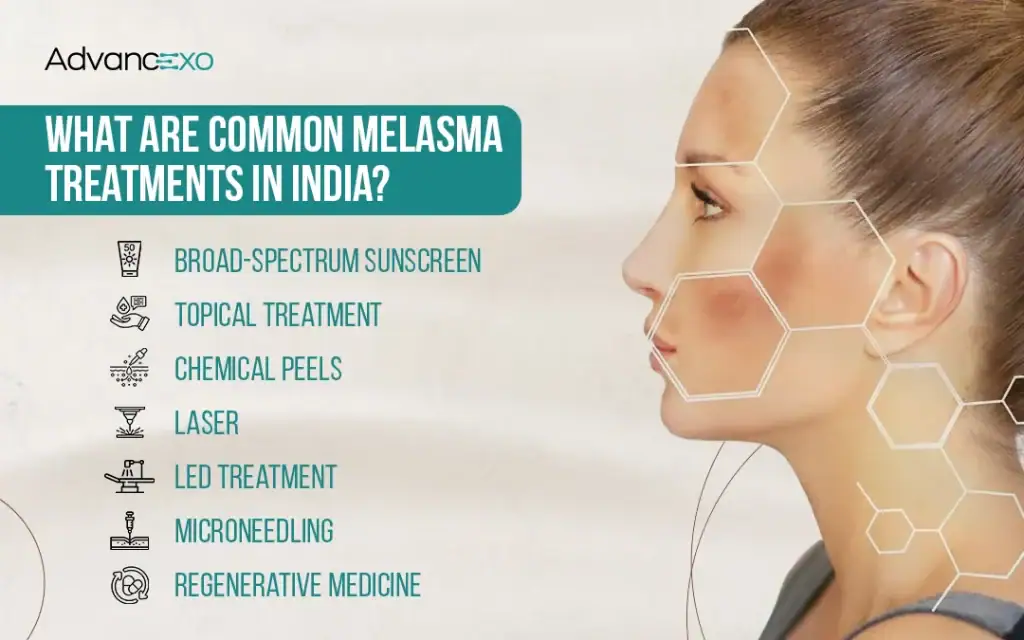
- Topical Treatment: Retin-A, retin-A micro, differin, refissa, tazorac are different topical creams. Topical creams are often combined with hydroquinone, which inhibits tyrosinase action (prevents excessive pigmentation progression). Some other natural products like aleisin, azelaic acid, arbutin, chromabright, kojic acid, niacinamide, etc., are prescribed. Works at the surface level, with less penetration into skin layers.
- Chemical Peels: Glycolic acids, salicylic acids, lactic acids, resorcinol, trichloracetic acid, or 14% hydroquinone are used for peeling skin to remove discolouration. Not suitable for sensitive skin or individuals with frequent allergic reactions
- Laser: Intense pulsed light for photorejuvenation to improve sun damage. Fractional lasers, or Q-switched 1064-nm Nd: YAG laser or ablative laser. Increased risk of PIH among Indian skin tone individuals
- LED Treatment: Use of light-emitting diode treatment reduces inflammation (useful in PIH). Limited penetration into skin layers
- Microneedling: Creates micropunctures on the target site. Stimulates natural mechanisms in collagen production. Microneedling alone often causes paradoxical worsening of PIH, especially among individuals with Fitzpatrick types IV–VI.
- Regenerative Medicine: Stem cell-derived exosomes have caught a wide range of attention from cosmetic dermatologists in recent years. Instead of superficial action, exosomes rejuvenate and repair skin at the cellular level. Most effective and safe for individuals with sensitive or allergy-prone skin. Acts at deeper or layer pigmentation [1]
What Makes Exosome Therapy Effective as a New-Age Skin Solution?
Exosomes are tiny packages that are filled with bioactive molecules like anti-aging, anti-inflammatory, skin brightening, etc. Mesenchymal stem cell-derived exosomes release bioactive molecules like proteins, microRNAs, cytokines, and growth factors. Exosomes boost cell-to-cell communication and acts at the cellular level.
Exosomes are Gaining Popularity in Aesthetic Clinics Due To:
- Boost Cell-to-Cell Communication: Exosomes release growth factors and cytokines (active signalling molecules). They promote cellular communication that modulates cellular behaviour. They stimulate the skin’s behaviour in overproducing pigments.
- Inhibits Melanin Production: Exosomes release microRNAs and proteins that downregulate tyrosinase enzyme activities. This is a major player in melanin synthesis. Exosomes gently rebalance melanin production processes, resulting in even, natural-looking results over time.
- Skin Regeneration: Exosomes release essential growth factors, microRNAs, and proteins that boost skin rejuvenation.
- Anti-Inflammation: Exosomes release anti-inflammatory molecules. It modulates the effect of PIH, preventing excessive melanocyte activity.
- Repair Mechanism: Exosomes release cytokines that boost repair mechanisms. They stimulate fibroblast activities, boost production of collagen and elastin. They create a supportive microenvironment [2]
What Works Best for Melasma Treatment for Dark Skin?
The combination of microneedling with exosomes has shown the best clinical outcomes in melasma treatment. Microneedling creates tiny punctures in the skin. This boosts collagen production. The topical application of the exosome followed by microneedling enables deeper penetration of exosomes in skin layers.
Clinical outcome reflects better efficacy, decreased melanin production, increased collagen production, decreased vascularity, and anti-inflammatory effect. Currently, exosome therapy is at an early stage of application; there are certain conditions that are non-negotiable. This includes:
- Superior quality viable exosomes must be used
- Procedure performed in a renowned clinic by an experienced professional
- Constant sun protection via using broad-spectrum sunscreen and protective clothing
- Follow the daily skincare routine as recommended by a dermatologist
- Aftercare instructions by a dermatologist must be followed
- Consistency matters in the best outcomes. Based on severity and outcome number of session are recommended [1]
*NOTE: Advancexo, India, is a leading laboratory that isolates and supplies superior quality exosomes for skin and hair rejuvenation. The laboratory is GMC certified, and products undergo a stringent screening process with every product dispatch.
Is Exosome Therapy Ideal for Sensitive Skin?
Melasma treatment for sensitive skin is reported safe and effective. Preclinical and clinical evidence reflects safety and tolerance of exosome application. They calm inflammation, modulate immune regulation, reduce redness, boost repair mechanisms, rejuvenate skin from within, and improve skin barrier function.
It is worth the hype if a professional administers high-quality exosomes.
Final Thoughts: Choosing the Right Path for Your Skin
- Melasma is a chronic skin problem that requires addressing problems at the root level.
- No one-size-fits-all solution
- Consult a dermatologist with your skin condition, understand and discuss the solution, set realistic expectations, and choose what’s best for your skin.
- Consistency and expert guidance are crucial.
References
- Shingala K, Nariya D, Shingala K. Exosomes in Skin of Color: Dermatological Insights, Therapeutic Potential, and Clinical Realities in India. Cureus. 2026 Jan 23;18(1).
- Proietti I, Battilotti C, Svara F, Innocenzi C, Spagnoli A, Potenza C. Efficacy and tolerability of a microneedling device plus exosomes for treating melasma. Applied Sciences. 2024 Aug 17;14(16):7252.
FAQ’s
Q- How to Reduce Melasma Pigmentation?
Melasma is a chronic skin condition that requires a personalized approach for addressing the issue. Hydroquinone, chemical peels, lasers, microneedling, and exosome therapy are recommended by dermatologists. The best treatment outcome depends on problem complexity and severity.
Q- How to Find the Best Melasma Treatment in Delhi?
Choosing the best clinic is crucial for obtaining the best outcome. Consult a dermatologist, discuss the condition and undergo a detailed health assessment for the development of a personalized approach suitable for your needs. Don’t fall for big promises and flashy claims.
Q- Does Exosome Therapy Work for Melasma?
Preclinical and clinical evidence reflects efficacy of the exosome therapy for melasma. Microneedling followed by superior quality exosome application displays the best results.


