Why are Exosomes the Talk of Aesthetics?
Imagine commanding your skin to look toned, healthier, brighter, and smoother- and you receive a positive response. Yes, you read it right- In modern dermatological science, the shift isn’t just treatment- it’s about guiding your skin to do smarter work.
Exosomes are tiny pouches or vesicles that facilitate cellular communication. Exosomes in Skincare can be thought of as a cell’s command that is coded by active biological molecules- proteins, microRNAs, cytokines, and growth factors.
What Exactly Are Exosomes?
Exosomes in Skincare are backed by science for introducing regenerative and anti-inflammatory potential. The tiny patches boost the skin’s natural repair process. Research reflects exosomes’ potential in triggering anti-inflammation, formation of new blood vessels, and boosting collagen synthesis. They aid in diminishing fine lines, dullness, freckles, wrinkles, or unwanted spots. The skin appears plumper, toned, brighter, smoother, and healthier.
Exosomes used for skin are the most effective element when used in their potent and purest state. For aesthetic application, exosomes are derived from mesenchymal stem cells (MSCs) isolated from umbilical cord tissue/blood. The molecules are nano-sized, 30-150 nm in diameter. Exosomes are formed inside multivesicular bodies (MVBs) in cells. Exosomes are released when MVBs merge with the cell membrane.
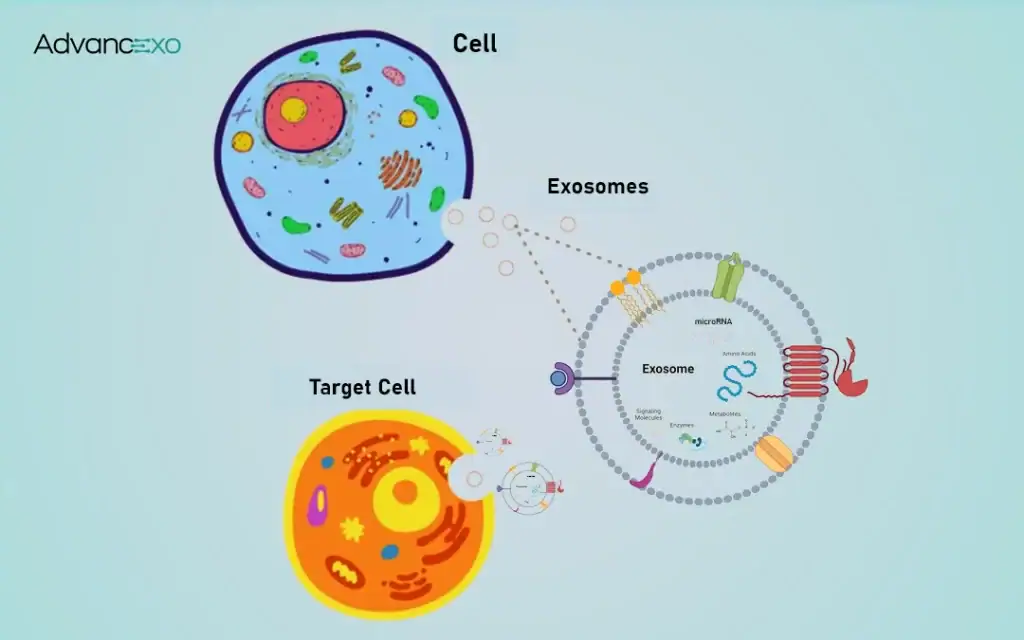
Figure: Exosomes Production & it’s Fate
How Exosomes Work for Skin Rejuvenation?
Inside the body, exosomes act as a messenger molecule that facilitates cellular communication. Exosomes for Skincare work at the cellular and molecular levels. The benefits of Exosome Therapy for skin include:
- Cell-to-Cell Signalling: Exosomes release signalling molecules that trigger intracellular communication
- Cell Regeneration: The growth factors trigger new cell regeneration, replacing damaged or dead cells
- Anti-Inflammation: Neutralises the effect of pro-inflammatory molecules, exosomes release various anti-inflammatory molecules such as IL-10, miR- 146a, miR-181a, TGF-β, etc.
- Cellular Repair: Stimulates natural cellular repair mechanisms
- Immunomodulation: Exosomes actively combat autoimmune skin conditions (vitiligo, skin blisters, etc.)
How Exosomes Transform Your Skin?
Exosomes improve skin health, combating multiple challenges. This includes:
- Anti-Aging: Reduces wrinkles, freckles, fine lines and dullness. Stimulates fibroblast activities and boosts the synthesis of collagen and elastin production
- Skin Hydration: Strengthen skin barrier mechanism. Aids in retaining moisture and hydration
- Skin Texture and Tone: Supports skin cell regeneration, rejuvenates skin, smoothens texture and tone
- Pigmentation: Exosomes modulate melanocytes (responsible for melanin production) and keratinocytes’ crosstalk. Lightens stubborn hyperpigmentation or melasma on the skin. Prevents recurrence with adequate maintenance
- Post-Procedure Recovery: Modulates the effect of other procedures like microneedling or laser skin resurfacing
Exosomes After Microneedling: Improving Treatment Efficacy
Clinical application of exosomes for Skincare revealed the best effect in combination with microneedling. Microneedling creates tiny punctures on the skin surface. The procedure stimulates the skin’s healing via boosting elastin and collagen production. The proteins make skin firmer and smoother.
Microneedling followed by exosomes aids in improved results. Exosomes penetrate deeper into the skin layers. The key benefits include:
- Improved Skin Rejuvenation: Introduces enhanced elasticity, collagen production, and firmness
- Faster Recovery: Boost the healing process
- Targeted Repair: Enable site-specific introduction of the exosomes. Effectively reduces pore size, improves skin barriers, treats fine lines, acne scars, and wrinkles.
- Safe: Safe for all skin types, has minimal downtime [1]
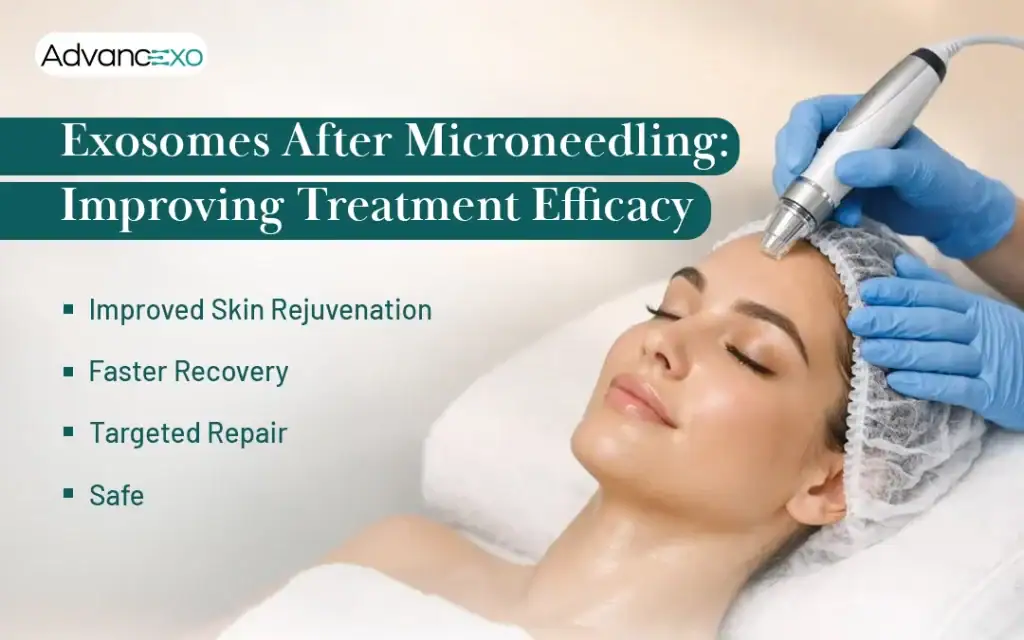
*NOTE: Dermatologist Recommends Skin Care After Microneedling with Exosomes for Effective Long-Term Outcome.
Where Exosomes Fit in Your Treatment Portfolio?
Dermatologists integrate microneedling and exosome therapy. It elevates clinical outcomes across key indications against skin problems:
Anti-Aging
- Enhances fibroblast activation, enhances collagen and elastin production
- Minimises post-procedure inflammation
- Enhance skin density, dermal quality, and elasticity
Scar Management
- Supports remodelling of strophic scars
- Modulates inflammation in acne-prone skin
- Boosts faster and more efficient tissue repair
Pigmentation Concerns
- Reduced risk of post-inflammatory hyperpigmentation (PIH)
- Regulates inflammation-associated melanocytes’ activities
- Promotes more uniform and balanced skin tone
How to Gain the Best Exosome Skin Care Products?
To gain the most effective outcome, choose the best exosome skin care products. Consider the following:
- Exosome Source: MSCs derived from umbilical cord tissue or blood are considered the gold standard
- Exosome Quality: Exosomes used in the most potent and pure state for the best outcome
- Purity & Formulation: Effective harvesting and minimal passage
- Consultation: Consult a renowned clinical and experienced dermatologist for exosome therapy for Skincare. Ensure the exosomes used are of superior quality
*Advancexo, India, is a renowned manufacturer of superior quality exosomes derived from MSCs for hair and skin application. The exosomes undergo a stringent quality check process.
Are Exosomes Safe?
Preclinical and clinical evidence reflected the safety and efficacy of the therapy. The notable changes include:
- Improves skin elasticity and firmness
- Reduction of fine lines or wrinkles, increased collagen and elastin production
- Reduction of pigmentation and skin texture
- Boost post-procedural recovery and prevent recurrence with adequate aftercare.
What Post-Microneedling Skincare Involves?
- Localised redness, swelling or sensitivity might appear immediately after the treatment. It might last 24-48 hours.
- Avoid strenuous exercise, sauna, or swimming pool for 24-48 h after the treatment.
- Use dermatologist-recommended products, use a gentle cleanser, cool water, and clean hands.
- Avoid direct sun exposure or dust, regularly use superior quality sunscreen >30++SPF and protective clothing.
- Avoid using harsh chemical-based products or makeup atleast a week after the treatment.
- A regular skincare routine can be resumed after 72 hours.
*NOTE: The outcome varies among individuals. Depending on the outcome, the dermatologist recommends a number of sessions.
Who are the Ideal Candidates?
- Individuals experiencing early to medium stage of ageing signs (freckles, fine lines, dullness, wrinkles)
- Expert in pigmentation problem (hyperpigmentation or melasma)
- Scarring or other spots on the skin
- Sensitive skin or experiencing inflammation
- Requires support for post-procedural healing (microneedling, laser, etc.), reduced downtime
What are the Other Clinical Skincare Options?
Often, there are multiple options available in the market for Skincare. We bring simpler comparisons to make sound choices.
| Parameters | Exosome | Platelet-rich plasma (PRP) | Topical Serum (Growth Factors) |
| Source | Stem cell derived | Patient’s own blood | Lab formulated growth factors or proteins |
| Function | Enhance cell-to-cell communication | Release growth factors at site of injury | Induce signalling molecules |
| Mechanism of Action | Triggers multiple signalling (Regeneration, repair mechanism, anti-inflammation, immunomodulation) | Collagen stimulation | Deliver surface-level support |
| Inflammation Modulation | Strong anti-inflammatory signalling | Potentially trigger inflammatory cascade | Minimal effect |
| Consistency | Product quality must be determined in every batch. Result depends on biological response | Variable (depends on platelet concentration) | Highly controlled |
*NOTE: Make a sound choice based on evidence-based outcomes. Discuss the problem, recommended treatment option, and possible outcome in detail with your dermatologist
Conclusion
Exosomes in Skincare are the future of aesthetic dermatology. These are active biological molecules that make the changes from within. Microneedling followed by exosome application brings the best long-term outcomes. Consult experienced dermatologist. In future, large-scale clinical trials and combination therapy must be explored for establishing long-term safety and efficacy.
References
Thakur A, Shah D, Rai D, Parra DC, Pathikonda S, Kurilova S, Cili A. Therapeutic values of exosomes in cosmetics, skin care, tissue regeneration, and dermatological diseases. Cosmetics. 2023 Apr 20;10(2):65.
FAQ’s
Q- Can Exosomes Replace Traditional Treatments?
Currently, exosomes for Skincare are at an early stage of therapeutic application. The evidence-based information suggests natural changes and supportive treatment.
Q- How Soon Can Patients See Results After Exosome Therapy?
The outcome appears after 1-2 weeks of the treatment. It depends on the underlying problem and its severity. The outcome can vary among individuals depending on individual factors.
Q- Can Exosomes for Skin Used as a Standalone Therapy?
Exosome therapy looks promising. It cannot be marked as a standalone therapy. In future, rigorous research and large-scale clinical trials are needed.