

Understanding Melasma: More Than Just Dark Patches
Melsama isn’t just skin patches- it’s a complex puzzle that requires the right skincare choices rather than quick fixes.
Bluish-grey or brown patches characterize the problem. The overproduction and accumulation of melanin (a natural pigment responsible for skin pigmentation) at specific spots affects skin colour. The common triggers include direct sun exposure, hormonal imbalance, or lifestyle factors.
We get it that melasma can make you feel overwhelmed. In some cases, Melasma goes away naturally in a few months to a year, or it can persist for a lifetime. Hereby, unveil dermatologist trusted Melasma Skin Care Routine that brings long-term changes.
Why a Targeted Skincare Routine Matters
There is no one solution to get rid of Melasma. Often, the most effective treatment involves a targeted and combined approach. The commonly affected areas in the face include cheeks, forehead, upper lip, and chin. Hormonal imbalance during pregnancy causes Melasma in many women. It is also known as the ‘mask of pregnancy’.
Melasma can be confused with other skin pigmentation issues- but they vary in appearance, development process and how they behave over time. The variation occurs in terms of:
- Root Cause: In Melasma, hormones play a big role. It is triggered during pregnancy, with the use of oral contraceptives, or other hormonal imbalances that make it more complex.
- Distribution Pattern: Appears in a symmetrical or patchy appearance on the targeted area. While other pigmentation issues, like post-inflammatory hyperpigmentation (PIH), appear more irregular and localized.
- Pigmentation Depth: Melasma appears in different skin layers- epidermal, dermal or mixed- which makes it harder to treat. Other pigmentation types mostly appear at the superficial layer, thus topical treatment becomes more effective.
- Recurrence: Melasma is notorious and stubborn; it appears recurrently. With conventional treatments like topical creams, chemical pills, lasers, etc, the patches can reappear with sun exposure and hormonal fluctuation.
- Sensitivity: Melasma is sensitive to environmental factors like UV exposure and heat, which act as triggers that flare up the problem
- Treatment Approach: Melasma requires a stringent skin care routine, whereas other pigmentation issues might respond to short-term treatments like exfoliation or spot-correcting serums.
Morning Routine: Your First Line of Defense
Consistency is key in adapting an effective melasma skin treatment. The everyday morning routine involves:
- Gentle skin cleansing without stripping the skin
- Antioxidant serum application (Vitamin C)
- Use broad-spectrum sunscreen
- Physical skin protection from UV exposure and heat
Night Routine: Repair, Restore, and Renew
Cleanse before your beauty sleep. The steps involve:
- Cleanse your skin for pollutant removal.
- Hydrate the skin with a good moisturizer.
- Night serum application: Retinoids, azelaic acid, and niacinamide
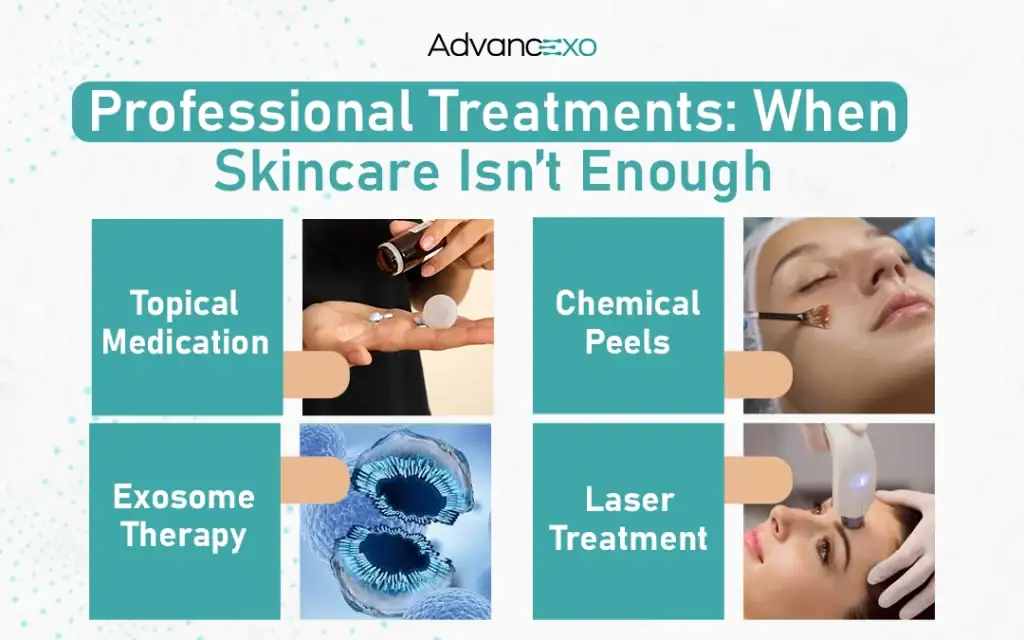
Professional Treatments: When Skincare Isn’t Enough
When a daily skincare routine isn’t giving you desirable results, dermatologists recommend advanced procedures. To determine what’s best for your skin, dermatologists figure out possible causes of melanoma. Besides, the first step is not to worsen the condition. Here are certain effective Melasma Pigmentation Treatments:
Topical Medication
Topical application of tyrosinase inhibitors prevents new pigmentation appearance by blocking melanin synthesis. Common tyrosinase inhibitors include azelaic acid, hydrocortisone, cysteamine, hydroquinone, methimazole, tranexamic acid, or topical retinoids. Dermatologists often recommend a combination of moderate topical steroids with hydroquinone and tretinoin. Some other agents include ascorbic acid, glutathione, kojic acid, resveratrol, arbutin, etc. However, watch out for any allergic reaction or side effects with topical serum or cream application. Some common side effects include itching, stinging sensation, redness, inflammation, etc.
Chemical Peels
The procedure involves applying certain chemicals (20-70% glycolic acid, 10-30% TCA, salicylic acid, etc.) on the skin surface, which is then peeled off. This removes the upper skin layer, allowing smoother and even coloured skin regeneration. The method is potentially ineffective where Melasma occurs at the deeper skin layer.
Laser Treatment
Involves light based procedure. Common laser light includes intense pulsed light, low fluence Q-switched laser, and non-ablative fractionated lasers. However, higher recurrence rates (64-81%) is a common problem within 3 months of the treatment.
Exosome Therapy
Exosomes introduce new hope in melasma treatment for face. It offers natural, long-term and effective solutions. Exosomes are extracellular vesicles that are secreted by stem cells and other cell types. For melasma treatment, mesenchymal stem cells (MSCs)-derived exosomes work exceptionally. Exosomes target the root cause of the problem internally, and they have become a trusted choice of dermatologists [1].
How Does Exosome Therapy Fit Into The Melasma Skin Care Routine?
Exosome therapy for Melasma didn’t emerge as a trend- it has exceptionally evolved as regenerative dermatology. The target is correcting underlying skin dysfunction at the deeper level. Exosomes act as bioactive molecules carrying cargos that consist of proteins, growth factors, microRNAs, and cytokines. Various molecular mechanisms, including inflammation, barrier dysfunction, or vascular factors, influence Melasma. Exosomes address multiple pathways, including:
- Regulation of melanocyte activity
- Reduction of inflammation
- Introduces skin repair mechanism
- Strengthens skin barrier
Exosome Therapy Integration into Skincare Routines
Exosome therapy application for Melasma Skin Treatment involves:
- Topical Application: Exosomes are topically massaged at the site of Melasma. Exosomes regulate cellular regeneration and repair mechanisms. They release various anti-inflammatory cytokines that reduce inflammation.
- Microneedling: Combining exosomes with the microneedling technique showed improved long-term outcomes. Microneedling involves creating controlled, tiny punctures on the skin surface. Microneedling alone kicks-starts repair mechanisms and triggers collagen production. Microneedling followed by topical application of exosomes allows deeper penetration in skin layers.
*Advancexo, India, is among the leading exosome manufactures that isolate and maintain superior quality exosomes suitable for hair and skin problems. Make a sound, evidence-based decision by consulting your dermatologist for treating your skin problem.
Dermatology-Driven Adoption
With the evolution of clinical aesthetics, dermatologists adapted microneedling with exosome treatment for Melasma. The key reason involves:
- Improvement in treatment tolerance
- Reduction of recurrence rates
- Supports long-term improvement in melasma pigmentation
- Safe and effective method for diverse skin tones, without side effects
Lifestyle Habits that Support Melasma Skin Care Routine
Treatment aftercare and modulation of certain lifestyle habits enable long-term outcomes. This includes:
- Dietary intervention
- Stress management
- Managing hormonal balance
- Using broad-spectrum sunscreen for UV protection
- Maintaining skin hydration and regulating an appropriate sleep cycle
Common Mistakes That Worsen Melasma
Avoid some of the common mistakes that can aggravate the melasma effect and lead to treatment failure. This includes:
- Over-exfoliation, use of harsh or irritating chemical products
- Skipping sunscreen or using the wrong one, or avoiding reapplication
- Expecting overnight results, continuous application of surface-level treatments
- Relying on over-the-counter products alone, visit your dermatologist for choosing the correct treatment.
- Ignoring the hormone role and internal triggers, maintain a healthy lifestyle.
Expert Tips for Long-Term Pigmentation Control
Follow the pro-tips from experts for maintaining an effective melasma skin care routine:
- Follow a morning and night skin care routine every day.
- Use broad-spectrum, good-quality sunscreen regularly.
- Avoid a lifestyle that can worsen your skin problems.
- Consult a dermatologist to choose a treatment option.
- Exosome therapy provides the most effective solution for melasms skin treatment. Choose superior quality products and don’t fall for bogus claims in the market.
Reference
- Wang T, Gao H, Wang D, Zhang C, Hu K, Zhang H, Lin J, Chen X. Stem cell‐derived exosomes in the treatment of Melasma and its percutaneous penetration. Lasers in surgery and medicine. 2023 Feb;55(2):178-89.
FAQ’s
Q- Can Melasma be Cured Permanently?
Melasma is a complex skin pigmentation condition. The complete cure of the problem is challenging. The current evidence-based clinical practice reflects the long-term success of combating Melasma with exosome-microneedling therapy. The combination of conventional and regenerative approaches can deliver better outcomes.
Q- Which Ingredient Works Fastest for Melasma?
The products, including hydroquinone, tretinoin, and corticosteroids, are known to work best for Melasma.
Q- Is Laser Treatment Safe for all Skin Types?
Generally, laser treatments are safe for all skin types. However, there is an increased chance of burn in case of deeper skin tone (Fitzpatrick scale 5-6). It is recommended to choose experienced clinicians and renowned clinics when opting for any skin care treatment.
Q- Can Melasma Return After Treatment?
The recurrence of Melasma is a common threat. With the emergence of regenerative approaches (exosome therapy), the recurrence can potentially be halted. The changes occur at the root level via natural mechanisms. It looks exceptionally promising as a melasma pigmentation treatment.


Good a blog toper
Thank you. Keep reading our weekly update: https://advancexo.com/
The content is really great
Thankyou. Don’t miss out our weekly update: https://advancexo.com/
WOW,Very wonderful
Thankyou, for any skin and hair rejuvenation details, Contact: For more information you may visit our website: https://advancexo.com/ For detailed information contact us via WhatsApp or call us at +91-9654321400, or mail us on info@advancells.com for more information. We’re here to support you every step of the way.
That was amazing