
Does the future of skin rejuvenation lie in a smart combination of skin resurfacing and regenerative science? Let’s explore it in this blog.
Chemical peels, also called ‘dermapeeling’ or ‘chemexfoliation’, have remained a cornerstone in the world of aesthetics. Rooted back to the medieval era, Egyptians, including Cleopatra, used wine (tartaric acid) and sour milk (lactic acid) for mild skin resurfacing.
In modern times, dermatologists widely use mild acidic chemicals like trichloroacetic acid (TCA), alpha-hydroxy acid (AHAs), or beta-hydroxy acid (BHAs) for skin rejuvenation. Despite proven benefits, peels alone might not be enough to undertake the complex biological science behind skin repair and rejuvenation.
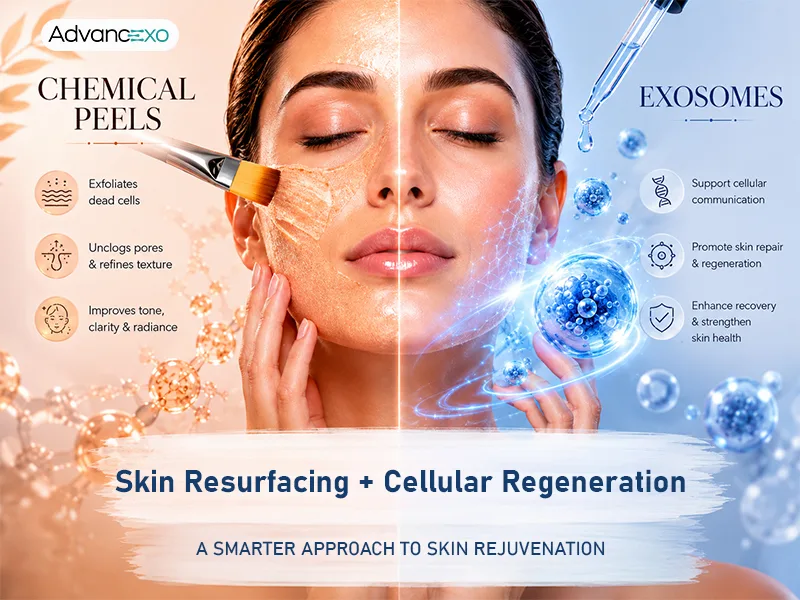
Chemical Peels & Exosomes are emerging as a smart duo offering a fresh approach to skin renewal. It unlocks smoother, radiant, even-toned, and youthful-looking skin.
What are Chemical Peels?
Chemical peels use mild chemical solution on the skin areas that are subjected to trauma or injury. Eventually, the skin layers peel off, revealing healthier, youthful, and even-toned skin. The common applications of chemical peels for face, neck or hands include:
- Addressing ageing signs (fine lines, wrinkles, or dullness)
- Acne or acne spots, sun spots, freckles, liver spots, uneven skin tone
- Mild scarring, rough skin or patchy appearance
- Pigmentation issue (melasma, hyperpigmentation, medication reaction spots)
What is the Science Behind Chemical Peels?
Dermatologists use solutions like salicylic acid, glycolic acid, TCA, AHAs, BHAs, or carbolic acids over the target skin area. Sometimes, chemical peels for face are combined with creating microinjuries on the skin surface, followed by chemical application.
Based on the problem and severity, dermatologists recommend chemical peel treatment depth. It includes:
- Lunchtime (Light) Chemical Peels: Subtle treatment, topmost skin layer is removed. Recommended for rough sun damage, fine lines or uneven skin tone. The recovery is quicker (within a few hours).
- Medium Chemical Peel: The outermost and upper part of the middle skin layer is removed. Moderate skin discolouring, acne scarring, age spots, etc. Chemical Peels for Acne Scars often require medium-deep chemical peels. Recovery takes a few days to a week.
- Deep Chemical Peel: The chemical penetrates at a deeper skin layer (lower middle skin layer). Recommended for extensive sun damage or spots, blotchy skin, deep scars, etc. The procedure is complex and requires extensive measures (up to eight weeks) of pre-skin preparation. The downtime is extensive.
*Chemical peel benefits include even-skin tone, disappearance of aging signs, and barrier removal for enhanced absorption of skin care products.
Why Chemical Peels Fall Short?
Chemical peels are normally safe, but they do not address various skin concerns or conditions. For instance, saggy skin, deeper facial lines, dark spots, and stubborn and recurring melasma or hyperpigmentation don’t respond well to chemical peels. Individuals with darker skin tones have an elevated risk of darkening after treatment. It can trigger post-inflammatory inflammation (PIH).
With emerging regenerative technology, there are solutions to address such shortcomings actively. Chemical peels & Exosomes can create a different story for your skin rejuvenation journey.
Meet Exosomes: Science-backed Skin Rejuvenation Solution
Exosomes for facial rejuvenation are globally gaining popularity in the aesthetic industry. Exosomes are tiny nano-sized molecules (extracellular vesicles) that are released by cells naturally. Dermatologists and researchers are emphasizing the use of mesenchymal stem cell-derived exosomes for skin rejuvenation.
Exosomes act as ‘cargo’ carrying bioactive molecules (proteins, microRNAs, signaling lipids, growth factors, and cytokines). Unlike chemical peels (that work at the surface level), exosomes rewire the changes from within. They deliver bioactive molecules at target sites and trigger cellular communication, reduce inflammation, modulate melanocyte activities, and boost post-procedural recovery. Once delivered, exosomes bind to the cell receptors like fibroblasts, endothelial cells or keratinocytes. With growing demands, exosomes look like next-gen solutions for facial rejuvenation.
How do Exosomes Make a Difference?
At the cellular and molecular level, exosomes stimulate various mechanisms, including:
- Boost Fibroblast Activities: Exosomes stimulate fibroblast production, introduce collagen and elastin remodeling. It reduces fine lines, restores firmness, and strengthens the dermal matrix over time.
- Enhance Skin Barrier Function & Hydration: Exosomes boost lipid balance and regulate ceramide production. They support healthier skin barriers and enable better moisture retention. There is reduced transdermal water loss, making skin supple, resilient or protected against environmental stressors.
- Reduce Inflammation: Exosomes release various anti-inflammatory cytokines that combat pro-inflammatory cytokine effects. They calm the inflammatory cascade, prevent prolonged erythema (redness) and boost post-procedural recovery.
- Combats Pigmentation: Exosomes modulate melanocyte activities and regulate melanin production. Stubborn skin problems, including hyperpigmentation, melasma, or PIH, are encountered. With subsequent aftercare, the recurrence significantly reduces
- Accelerate Repair Mechanism: Exosomes release various cytokines and growth factors. It activates the body’s natural repair mechanism. It regulates naive blood vessel formation at the target site, which allows adequate blood, oxygen and nutritional flow at the damaged site.
Why Does Pairing Make Sense?
Chemical peels alone remove superficial imperfections and encourage cellular turnover. They resurface the skin microenvironment while enabling fewer spots and youthful skin. However, skin rejuvenation is a science that extends far beyond resurfacing alone. Various factors like cellular communication, active tissue repair and regeneration mechanism, anti-aging signalling, or creating a healthier skin microenvironment matter in setting long-term goals.
Combining chemical peels and exosome therapy complements each other, thus producing synergistic effects. Early clinical evidence supported significant improvement in post-procedural recovery, improved skin quality, and supported healing. Pairing chemical peels for acne scars with exosomes is a game-changer for acne-prone skin and scar reduction. The anti-inflammatory effect introduced by exosomes calms sensitivity, soothes skin and reduces breakouts.
Currently, exosomes as regenerative alternatives are an emerging area. In the future, large-scale clinical trials are desired to establish long-term safety, tolerance, and efficacy.
Who are Suitable Candidates for this Combination?
Exosomes combined with chemical peeling produce synergistic effects. Candidates benefited from the combination, which includes:
- Moderate to advanced signs of aging signs
- Stubborn pigmentation, recurrent melasma, uneven texture
- Acne-prone skin or high risk of PIH
- Individuals seeking a natural and long-term solution for skin rejuvenation
What are the Major Clinical Considerations?
Dermatologists recommend suitable treatment based on various considerations- skin type, tone, problem, severity, skin sensitivity, infection, recovery time, etc. The key consideration before opting for treatment includes:
- Choose a renowned clinic with a separate facility for the procedure.
- Consult an experienced dermatologist who is easy-going and shares the kith and kin of the procedure before you choose them.
- Use superior-quality exosomes for the procedure.
- Follow aftercare instructions. The dermatologist might recommend multiple follow-up sessions based on the client’s needs.
*Advancexo, India, is a leading clinical-grade exosomes supplier for skin and hair rejuvenation. The exosomes undergo stringent quality checks before being dispatched.
Conclusion
Combining exosomes and chemical peels is a power duo that aids in a long-term, sustainable skin rejuvenation solution. Together, the synergistic approach addresses the complex skin problems, including stubborn recurring pigmentation, acne-prone skin or deeper anti-aging signs. Candidates opting for the skin rejuvenation treatment must carefully consider evidence-based options for safe and long-term outcomes.
FAQ’s
Q- Can Chemical Peels and Exosomes Be Combined?
Yes, currently, many dermatologists are exploring the combination of chemical peels and exosomes for skin rejuvenation. Combining both approaches brings synergistic effects and efficiently treats complex skin conditions that cannot be treated alone with skin resurfacing.
Q- Can Chemical Peels Work Against Acne Scars?
Chemical peels work for skin surfacing and healthy cell turnover. However, for acne-prone skin, deeper chemical peels alone can trigger erythema, post-inflammatory inflammation, allergic reaction, or aggravate the skin problem.
Q- What are the Benefits of a Chemical Peel for the Face?
Chemical peel benefits include the removal of rough, pigmented, patchy skin. It results in the formation of younger-looking, brighter-toned, smoother-textured, and glowy skin. The superficial imperfection on the skin is minimized.
Q- How Long Does Recovery Take After a Chemical Peel Treatment?
Recovery time after chemical peel treatment depends on the peel depth recommended by dermatologists. The recovery time can vary between a few hours and weeks. The combination of exosomes with chemical peels minimizes the recovery time and provides a smoother transformation experience to the individual.

I really appreciate how this post explains the limitations of chemical peels and why a regenerative approach like exosomes could enhance results. The combination seems like a thoughtful way to tackle both surface-level and deeper skin rejuvenation, especially for uneven texture and tone. It’s interesting to see modern techniques building on such a long history of skin treatments.
Thankyou for appreciation, Yes for addressing multiple problems and gain long-term outcome, combination treatment produce better effect. For detailed information contact us via WhatsApp or call us at +91-9654321400, or mail us on info@advancells.com for more information. We’re here to support you every step of the way.