Hyperpigmentation on Skin- What is Causing It?
Stubborn facial patches stealing your glow? Here’s a more innovative solution for your radiant skin.
Hyperpigmentation is a common skin condition that darkens an area of skin. Hyperpigmentation occurs due to excessive production of melanin and its accumulation in specific areas of the skin. The production of extra melanin can result in a spot or patchy appearance, which looks grey, black, red, brown or pink. Though the condition is harmless, it often makes people self-conscious. Adaptation of specific lifestyle changes and opting for the Best Treatment for Hyperpigmentation can actually make it go away.
We understand that choosing the Best Treatment for Hyperpigmentation can be overwhelming, so we bring you the options available for Skin Pigmentation Treatment and provide the correct explanation.
What Causes Hyperpigmentation?
To better understand the Best Treatment for Pigmentation, let’s dive deeper into its underlying causes:-
- Excessive sun exposure often leads to solar lentigines
- Hormonal or lifestyle changes
- Post-inflammatory Hyperpigmentation (PI)
- Hormonal and lifestyle influences
- Skin injury (acne, burns, cuts)
What are the Common Skin Pigmentation Treatments?
Hyperpigmentation treatment recommended depends on its underlying causes. Some of the standard recommended treatments include:
- Avoiding direct sun exposure, wearing protective clothing or using high SPF sunscreen
- Tropical Therapy: Dermatologists might recommend creams or ointments for topical application on the skin. Some typical creams include azelaic acid, glycolic acid, corticosteroids, salicylic acid, kojic acid, vitamin C or B3, tretinoin, or skin bleach.
- Chemical Peels: Dermatologist uses chemical solutions such as glycolic acid, carbolic acid, salicylic acid, or trichloroacetic acid peeling
- Laser Skin Resurfacing: It can be done in two ways: 1) carbon dioxide, 2) erbium laser. Laser treatment smoothens the skin and reduces skin pigmentation.
- Cryotherapy: During the therapy dermatologist applies frigid temperatures to abnormal or hyperpigmented areas. Abnormal tissue fails to thrive in such cold temperatures and dies off after treatment.
Limitations of Traditional Skin Pigmentation Treatment
The solution might be temporary and have several side effects, such as:
- Application of tropical agents after some time might show reappearance of skin pigmentation
- Chemical peels use harsh chemicals that can be irritating to the skin and cause redness and rashes
- Associated with potential toxicity and mutagenicity with laser or chemical peels
Best Treatment for Hyperpigmentation: Why Exosome Therapy Stands Out
In recent times, exosome research and its therapeutic application are evolving in the global aesthetic market. Dermatologists believe exosomes to be a safe and effective emerging option for skin whitening and inhibiting pigmentation. Exosome therapy mechanism involves:
- Melanin Regulation: Exosome-derived molecules, such as proteins (Collagen or elastin) and miRNAs, regulate the activities of melanocytes (produce melanin) and inhibit melanin synthesis
- Antioxidant & Antiinflammatory Activities: Exosomes are tiny vesicles that have strong antiinflammatory and antioxidant properties that neutralize free radicals and inflammation at the site of Hyperpigmentation.
- Improving Skin Barrier: Exosomes improve skin barrier functions and integrity, hence enabling the maintenance of even skin tone. Several proteins, biomolecules and lipids strengthen the stratum corneum and reduce transepidermal water loss, thus restoring hydration.
- Cell Regeneration and Recovery: Exosomes stimulate proliferation and differentiation of skin cells, including keratinocytes as well as fibroblasts.
How Exosomes Work at the Cellular & Molecular Level
Exosomes are natural, biocompatible molecules that bring changes at the cellular and molecular level, that is, induce change from inside:
- Reduces melanocyte overactivity
- Calms inflammation
- Repairing the skin barrier
- Boosts Collagen for brighter skin
- Boosts Elastins for hydrated, smooth skin
- Supports Extracellular Matrix (ECM)
Best Treatment for Pigmentation on Face: How Exosome Stands Out?
The face is the centre of an individual’s self-consciousness. It’s crucial to choose therapy that is regulated, safe, and backed by successful research. These supercharged messenger molecules deliver critical components: proteins, antioxidants, and antiinflammatory agents to the target area of the face. These molecules effectively combat skin pigmentations, aging signs, acne spots, wrinkles, and fine lines.
Exosomes facilitate:
- cell-to-cell communication and make your skin look healthier
- restores balance in melanin production
- modulates the central player of Hyperpigmentation and cellular regeneration, including TGF-β1
- boosts collagen production that reduces inflammation
Advantages of Exosome Therapy for Skin Pigmentation
Exosome therapy has multifold advantages for treating skin pigmentations over traditional methods. This includes: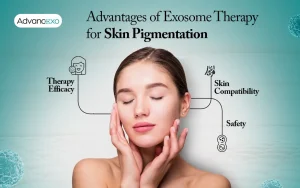
- Therapy Efficacy: Clinical research shows remarkable efficacy in reducing Hyperpigmentation, skin tone, and removing blemishes. Such actions occur with melanin synthesis regulation, antioxidant and antiinflammatory effects.
- Skin Compatibility: Exosomes are highly compatible as derived from the body’s cells. These biomolecules work in harmony with other functions of the body without causing any significant side effects.
- Safety: Exosomes derived from MSCs are widely used; hence, they are natural and biocompatible. These natural molecules include proteins, lipids, and genetic molecules that are well tolerated by the body.
Exosomes + Microneedling: Gold Standard for Hyperpigmentation
The route of exosome application of exosome can be:
Topical Application
Exosome-infused serums are applied or massaged over the area of Hyperpigmentation. However, topical applications are associated with specific challenges, like:
- poor penetration in the target area
- rapid clearance and shorter half-life
- challenges with adequate dosing determination
Microneedling:
Combining Exosomes with Microneedling enables deeper penetration of the molecules in the skin. This involves systematic applications, the steps include:
- Consultation: Dermatologist assesses the condition of the skin and sets clear goals for exosome treatment
- Cleansing and Numbing: The area of application is cleaned and numbed to reduce discomfort
- Microneedling: Fine needles are used to create channels in the skin
- Exosome application: Exosomes at an appropriate dose are applied
- Mask: Silk or hydrating mask recommended for a soothing effect, and enables deep penetration
- Aftercare: Dermatologist recommends complete aftercare guidance, including application of sunscreen, avoiding sun exposure for a longer time, avoiding makeup or harsh chemical application to the skin, and avoiding frequent touching to support healing
Side Effects:
The common side effects of exosome therapy with microneedling include:
- Redness or swelling in the area of application, which goes away in 24-48 hours
- Mild irritation
- Sun sensitivity
Best Treatment for Hyperpigmentation- Exosomes Offering Long-Term Results
- Introduces regenerative healing
- Produces symptoms based on healing
- Lower risks of rebound pigmentation
- Suitable for sensitive, acne-prone, or melasma-prone skin
What Should Be Kept in Mind
- Consult an experienced dermatologist
- Discuss treatment details- dose, time, downtime, possible side effects, etc.
- Highly pure exosomes must be used
- Exosome therapy is not yet FDA-approved; hence, be aware of clinics making 100% success claims
Advancexo is one of the organizations in India that exclusively works on exosome research.
Exosome Therapy for the Future: Area of Improvement
Currently, exosome therapy is widely explored. The core area of research includes:
- Standardization of the treatment (determining dose-response relationship)
- Lack of a large-scale randomized trial
- Evidence-based backing for long-term safety
- Personalized products based on skin type, ethnicity, problem, etc.
Conclusion: Glow Differently With Exosome-Based Pigmentation Therapy
Exosome therapy, as the Best Treatment for Hyperpigmentation, is the future of the aesthetic industry, derived from regenerative dermatology. Unlike traditional approaches, exosome therapy targets root cellular and molecular pathways responsible for skin pigmentation.
The combination of precision of treatment with a regenerative approach is paving a new path for everyone to achieve radiant skin.
FAQ’s
Q- Can I treat Hyperpigmentation at home?
Various products in the market claim to treat Hyperpigmentation of the skin; however, we recommend consulting an experienced dermatologist to choose the best option for you.
Q- Are home remedies the best Skin Pigmentation Treatment?
No, many home therapies like using lemon juice, turmeric paste, apple cider, and aloe vera are generally used for hyperpigmentation treatment. However, without understanding the root cause of the problem, symptoms might be elevated.
Q- Is exosome therapy considered as Best Treatment for Pigmentation?
Exosome therapy is best in terms of safety and efficacy. It cures Hyperpigmentation from the roots and provides clear and radiant skin.
Q- Is exosome therapy for Hyperpigmentation safe?
Yes, exosome therapy is generally safe and effective for Hyperpigmentation and has a lower risk associated with traditional treatment.