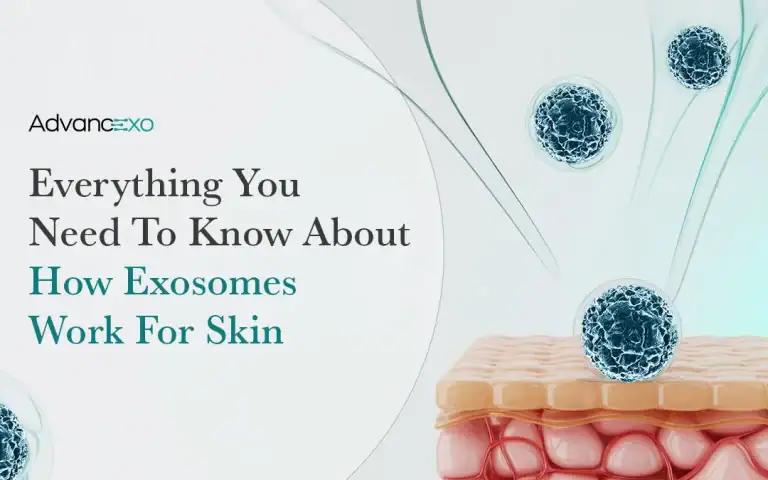
In aesthetic dermatology, the conversation surrounding skin rejuvenation moves towards treatments focused on the skin’s biological environment. The thought has moved beyond conventional activities or cosmetic procedures. The focus has shifted towards regenerative approaches like Exosomes in Skincare that boost intercellular communication.
Exosomes are nanosized vesicles that carry various biological molecules, including proteins, microRNAs, cytokines, and signalling molecules. They actively interact with fibroblasts, keratinocytes and other skin cell types. They actively modulate extracellular matrix activities, skin repair, and tissue maintenance. Exosomes facial rejuvenation have been widely used in the form of topical application. The current concern is maintaining formulation quality, isolation procedures, administration methods, and drawing large-scale clinical evidence. The current article focuses on unveiling the role of exosomes in skincare and evaluating the best fit into the evolving landscape of professionals.
What is the Role of Exosomes in Skin Biology?
Exosomes are nano-sized sac-like structures that are normally released by cells. They act as cargo that carries various bioactive molecules, including essential proteins, microRNAs, cytokines, growth factors, and other signalling molecules. Researchers widely explore the potential of mesenchymal stem cell (MSC) derived exosomes for skin rejuvenation. With ageing, the skin normally loses firmness, becomes dull, fine lines and wrinkles appear, and it becomes uneven in texture. The normal ability of cellular renewal gets compromised. Exosomes in skincare act as cellular messengers that restore cellular communication across multiple skin layers. They impart a smoother texture, brighter skin, even tone and radiant appearance.
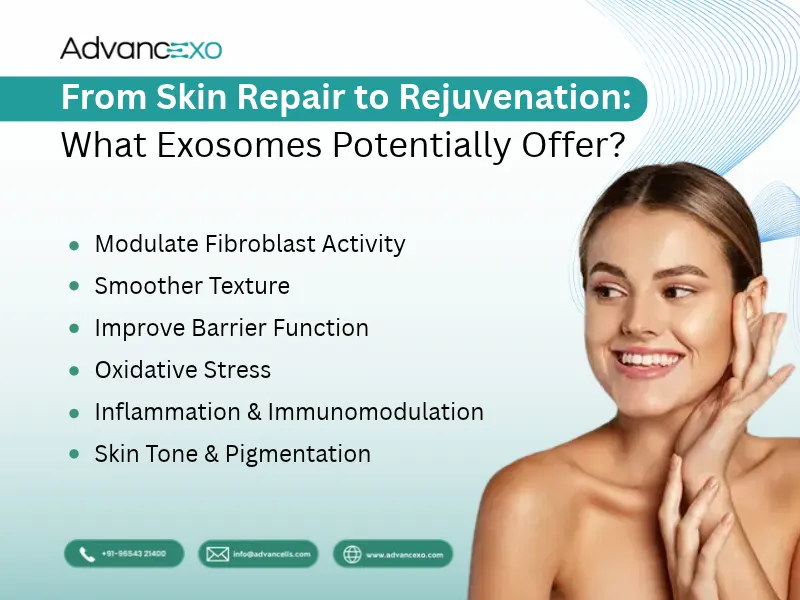
From Skin Repair to Rejuvenation: What Exosomes Potentially Offer?
Exosome Therapy for Skin targets skin problems at multiple cellular levels. The key mechanism includes:
- Modulate Fibroblast Activity: Exosomes modulate fibroblast activity and the extracellular matrix. It boosts elastin and collagen production (structural proteins) that boost skin firmness
- Smoother Texture: Exosomes release various cytokines and growth factors. It restores cellular communication across multiple skin layers
- Improve Barrier Function: Exosomes release lipids; they boost synthesis of skin barrier components including ceramides, hyaluronic acid, filaggrin, etc. They improve facial skin barrier integrity. They prevent excessive water loss and improve skin hydration
- Oxidative Stress: MSC-derived exosomes are well known to scavenge free radicals and neutralise oxidative stress
- Inflammation and Immunomodulation: Exosomes significantly reduce inflammation and combat the action of pro-inflammatory cytokines. They upregulate anti-inflammatory cytokines and modulate immune response. Exosome application prevent unwanted autoimmune reactions and create calmer microenvironment
- Skin Tone & Pigmentation: Exosomes modulate melanocyte activities (responsible for melanin production). They deliver specific microRNAs and signalling molecules that control melanogenesis. They efficiently downregulate key enzymes like tyrosinases and MITF and normalise melanin production at the targeted hyperpigmented areas [1,2]
Exosomes Facial Rejuvenation: Where Science Meets Modern Aesthetics
The growing interest in regenerative aesthetics with exosomes in skincare reflects a broader therapeutic shift. The focus has moved from immediate cosmetic improvements to the introduction of exosome-based formulations for facial rejuvenation. The key aspects include:
- Exosome Facial Treatment: Exosomes boost cellular communication and skin maintenance. Their association with fibroblast activity, collagen regulation and tissue repair has made them an interesting area of exploration for facial rejuvenation
- Topical Exosome Formulations: Topical exosome-based formulations improve skin quality, texture and overall appearance
- Combination Approaches: Dermatologists often combine established procedures like microneedling, peels or laser with exosome application to gain better long-term outcomes [1]
Exosome Therapy for Skin: What Does Emerging Research Actually Tell Us?
Preclinical and early clinical evidence has set up a positive trend in Exosomes for Skin Treatment application. The key indications include:
- Modulates fibroblast activities and facilitates extracellular matrix remodelling
- Boost collagen and elastin production, smoother skin texture and even tone
- Support skin repair and tissue regeneration
- Improvement in skin texture, hydration, and elasticity
- Diminished fine lines, wrinkles, freckles, and dullness [2]
*NOTE: Although several biological mechanisms appear promising, larger, well-designed clinical studies are needed to establish long-term safety, efficacy and tolerability of exosome-based skin treatments.
What Should Aesthetic Professionals and Candidates Evaluate?
Before opting for exosome therapy for skin rejuvenation, both the candidate and dermatologist consider certain factors. This includes:
- Evaluate the source and composition of the procured exosomes
- Availability of the characterisation report; ensure adequate composition, components, enzymatic activities, and exosome quantity in the vial
- Exosome purity and consistency for skincare across the batch
- Ensure product formulation conditions, stability, storage conditions, product integrity and compatibility for topical application
*NOTE: Advancexo, India is a leading manufacturer and supplier of clinical-grade exosomes for skin and hair rejuvenation. The products come with a Certificate of Authentication (CoA).
What Lies Ahead for Exosome-Based Skincare?
Exosomes for skincare have added a new dimension to aesthetic dermatology. They potentially stimulate cellular communication and responses to various signs of ageing, skin damage, barrier disruption, etc. Future research focuses on the development of well-structured clinical trials to establish long-term safety and efficacy. Future research concentrates on:
- Development of More Consistent Formulations: Better standardisation of the product formulation, including exosome composition, purity, stability and biological activity. This will significantly improve product quality and consistency across different preparations.
- Finding Better Ways to Deliver Exosomes: The skin’s natural barrier presents a challenge for topical formulations. Researchers are therefore exploring how formulation design and delivery approaches influence exosome availability within the skin.
- Personalised Rejuvenation Approaches: Research tends to establish exosome-based formulations based on an individual’s specific needs
- Develop Stronger Clinical Evidence: Well-designed human studies to understand the efficacy of the formulations.
- Overall, the efficacy and reliability of exosomes in skincare applications depend on the translation of the cellular research into meaningful aesthetic outcomes.
References
- Sreeraj H, AnuKiruthika R, Tamilselvi KS, Subha D. Exosomes for skin treatment: therapeutic and cosmetic applications. Nano TransMed. 2024 Dec 1;3:100048.
- Villarreal-Gómez LJ, Origel-Lucio S, Hernández-Hernández DA, Pérez-González GL. Use of exosomes for cosmetics applications. Cosmetics. 2025 Jan 13;12(1):9.
FAQ’s
Q- How do exosomes work in skincare?
Exosomes efficiently support cellular communication mediated by the delivery of biological molecules (proteins, lipids, microRNAs, cytokines, and signalling molecules). In aesthetic dermatology, exosomes in skincare have attracted the attention of dermatologists and researchers to stimulate fibroblast activity, collagen regulation and skin maintenance.
Q- Can exosomes reduce visible signs of ageing?
Yes, the emerging evidence shows improvement in collagen and elastin production and induces cellular repair and skin regeneration. Exosomes facial rejuvenation improves fine lines, smooths uneven texture, and improves skin firmness.
Q- What happens during an exosome facial treatment?
Exosome facial treatment involves the application of an exosome-based topical formulation as part of a professional skincare protocol. Depending on the product and aesthetic approach, it is incorporated into skin rejuvenation routines alongside other procedures. The formulation, quality of the product and application method are important considerations when evaluating its suitability.
Q- Are exosomes for skin treatment clinically proven?
No, currently the evidence related to exosomes for treatment is evolving. They potentially boost cellular repair, reduce inflammation, modulate immune response, and create a supportive microenvironment. Exosome Therapy for Skin depends on certain factors like formulation quality, source, preparation, formulation, and administration procedure.