Hair texture is something that everyone notices at first sight. Whether the hair is silky, soft, smooth, coarse, fizzy or wavy influences one’s appearance. However, hair texture is more than just defining it as straight, wavy, or curly. One notices the difference in their hair texture based on lifestyle factors, environmental exposure, hormonal fluctuation, or ageing. Infact, changes in scalp health also influence hair quality, making it appear dry, rough or difficult to manage.
Various hair care products in the market claim instant fixes, but the product works superficially in the hair shaft. The actual cause of hair texture change appears much deeper at the scalp and hair follicle. In modern times, dermatologists and individuals seek long-term solutions to improve hair quality. Regenerative approaches like platelet-rich plasma (PRP) and exosome therapy are widely explored. This article explores what hair texture actually means, how it changes, and what effective modern-day solutions can enhance hair texture.
Why Does Hair Texture Change Over Time?
Understanding internal and external factors affecting Hair Texture is the first step towards choosing effective hair texture treatment. The factors include:
Ageing
- Reduced collagen production adversely affects hair elasticity and strength
- Decline in sebum levels increases dryness and frizz
- Loss of natural oil in scalp
Hormonal Fluctuation
- Events like pregnancy, menopause, and thyroid disorder alter hair texture
- Hair becomes fine, brittle and loses its natural shine
- In some instances, like pregnancy, hair might regain its original form
Heat Styling and Chemical Treatments
- Frequent use of heat, like straighteners, curling irons, and blow dryers
- Regular hair colouring, bleaching, rebonding, or smoothing treatments change hair texture
- Use of excessive shampoo containing harsh chemicals strips away the natural oil
- Hair becomes rough, porous and prone to split ends
Nutritional Deficiencies
- Adequate nutritional intake maintains optimal hair health
- Keratin, the core protein responsible for hair texture
- Iron, adequate oxygen delivery
- Biotin, Vitamin B, D and zinc are essential for maintaining healthy hair follicles
- Omega-3 fatty acids maintain scalp hydration and smoothness
Environmental Damage
- Prolonged UV exposure that degrades hair proteins
- Exposure to air pollutants increases oxidative stress
- Hard water consists of excessive minerals that make hair dry and coarse
- Change in weather; humidity affects hair texture
Scalp Health and Inflammation
- Decline in scalp health or dandruff
- Product buildup on scalp blocks scalp surface
- Low-grade chronic inflammation and irritation weaken hair follicles
Based on the cause, hair texture treatment is personalized. Along with conventional treatment, dermatologists introduce regenerative strategies like PRP and exosomes for long-term outcomes.
What are Common Signs that Need Attention?
- Persistent roughness
- Loss of luster and shine
- Dry, dull, and frizzy strands
- Increased breakage
- Hair becoming finer or weaker
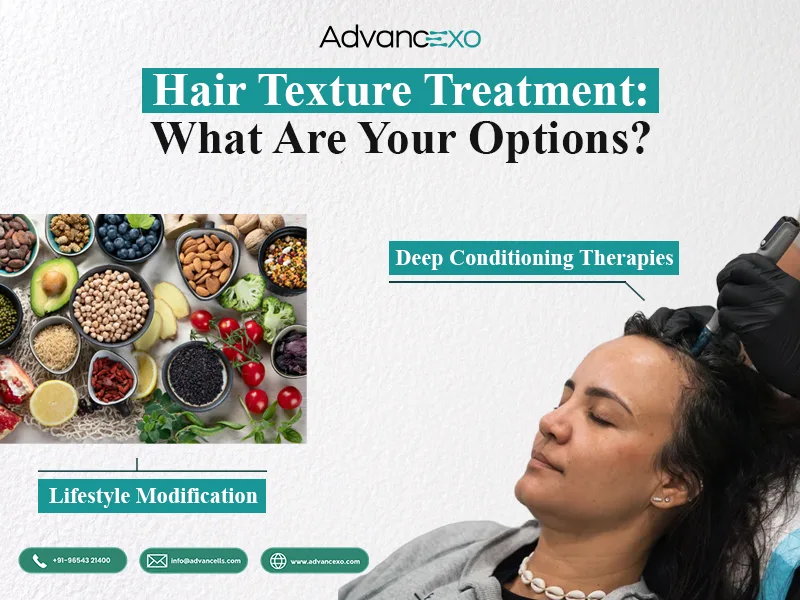
Hair Texture Treatment: What Are Your Options?
Hair texture treatment is based on understanding the cause of change. The Best Hair Texture Treatment is often believed to be a combination of adapting a healthy lifestyle and targeted therapies. These include:
Lifestyle Modification
- Dietary intervention involving a diet enriched with protein, iron, zinc, vitamins and omega-3 fatty acids
- Maintain hydration by adequate water intake, use of mild moisturizing shampoo and conditioner based on hair type
- Regular moisturization with hair mask to prevent dryness
- Avoid harsh chemical products containing sulfate or excessive alcohol
- Avoid excessive heat for hair styling, overwashing or tight hairstyling
Deep Conditioning Therapies
Enable replenishing moisture, improve frizz, reduce dryness, and gain better elasticity and flexibility. Some common techniques include:
Keratin and Smoothing Treatments
- Coat and smooth the hair shaft for a short time
- Reduces frizz or flyaways, improves shine
Scalp-Focused Therapies
- Involves removal of product buildup, scalp hydration and nourishment
- Professional scalp cleansing to remove product buildup, dandruff
- Hydrating and nourishing scalp treatments.
- Improve scalp circulation by application of low-level laser therapy (LLLT), microneedling, collagen induction therapy or oxygen infusion treatment
Medical Evaluation
- Dermatologist evaluates scalp to determine any underlying medical condition
- Persistence of scalp redness, scaling, itching or discomfort can be signs of infection
- Certain other issues like thyroid disorder, seborrheic dermatitis, psoriasis, or infection require a different treatment approach
PRP for Scalp: What Does the Research Suggest?
PRP for Hair Texture is Based on a Regenerative Approach Where an Individual’s Own Blood is Drawn. The Process Involves:
- Centrifugation of 10-60 ml of the individual’s blood
- Platelet-rich plasma is drawn and injected into the scalp
- PRP are rich in growth factors that boost follicular health
- However, the key limitation is that the quality and concentration of the growth factor depend on the individual’s health condition
- Another challenge with PRP is the requirement of multiple sessions to gain a relevant outcome
Beyond PRP: Why Regenerative Science Is Shifting the Conversation?
Regenerative dermatology is rapidly evolving to gain long-term solutions. Exosome Therapy for Hair Texture is widely explored by researchers and dermatologists for combating hair texture issues from within. Exosomes are tiny nano-sized (30-150 nm) extracellular vesicles that are secreted by stem cells. The key features include:
- Tiny sac structure bound with a membrane inside cells that acts as cargo
- Delivers active bioactive molecules including proteins, microRNAs, cytokines, growth factors, and signalling molecules
- These bioactive molecules activate dormant hair follicles, boost blood circulation, and introduce changes at the cellular level.
How Does Exosome Therapy for Hair Texture Work?
Exosome Therapy for Hair Texture Undertakes Multiple Mechanisms of Action. This Includes:
- Stimulates Blood Circulation: Exosomes release various growth factors like VEGF, FGF, etc. that boost tiny blood vessel formation. This boosts blood circulation in the scalp and improves oxygen and nutrient supply
- Stimulation of Hair Growth: Activates dormant hair follicles and pushes them into the anagen phase. This stimulates naive hair growth and improves hair texture and quality
- Anti-Inflammation: Exosomes release various anti-inflammatory molecules that combat low-grade chronic inflammation. It stimulates the immune response and improves the scalp microenvironment
- Long-Lasting Outcome: The effect of exosomes lasts for several months with appropriate aftercare. Based on the hair problem and response, the dermatologist recommends a session gap.
*NOTE: Exosome therapy for hair texture is still at an early stage of development. Although the outcomes are promising, there is a need for large-scale evidence to establish its long-term efficacy. Individuals opting for exosome therapy must make sound decisions based on evidence-based outcomes. Consult a renowned dermatologist and clinic and have a detailed discussion related to the treatment. The exosome quality matters in gaining desirable results. Advancexo, India, is a leading supplier of clinical-grade exosomes for skin and hair rejuvenation. The products are supplied with a Certificate of Authentication (CoA). Choose the exosome for application mindfully.
Conclusion
Hair texture reflects the follicular health and hair shaft condition of the individual. Understanding hair texture change is crucial for choosing adequate treatment. The combination of healthy lifestyle, conventional treatment regimen with regenerative aesthetics can transform hair quality significantly.
FAQ’s
Q- What Change the Hair’s Texture?
Hair’s texture changes can occur due to nutritional deficiencies, hormonal fluctuations, infection, follicular miniaturization, or aging. These factors adversely affect scalp health, which can significantly increase hair’s fall and changes in texture.
Q- What is the Best Treatment for Improving Hair’s Texture?
Choosing the best treatment for hair’s texture depends on identification of the underlying cause. Various treatment approaches include dietary intervention, medication, LLLT, PRP, and exosome therapy.
Q- Does PRP Improve Hair Texture or Only Hair Growth?
PRP is rich in growth factors. It stimulates hair follicle activation. It boosts hair growth by improving the hair diameter of hair shafts. The procedure results in hair regrowth that is thicker, shiner, and stronger.
Q- Can Exosome Therapy Help Improve Hair Texture?
Yes, exosomes are a cargo of bioactive molecules including essential proteins, microRNAs, cytokines, and signalling molecules. They activate dormant hair follicles, reduce inflammation, and improve blood flow in the scalp