
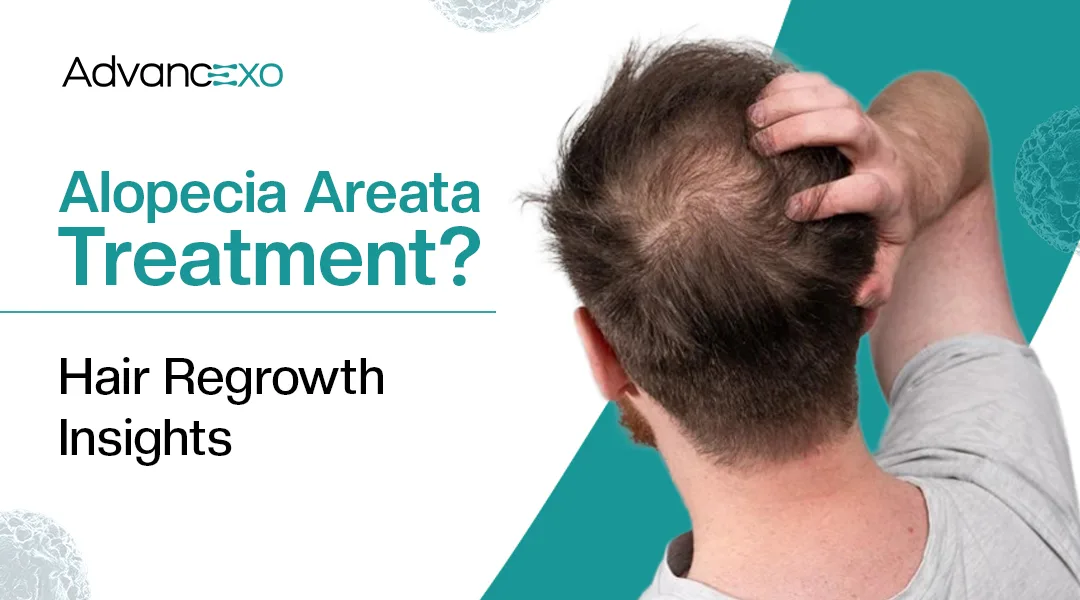
The appearance of smooth bald patches on your scalp can suddenly become alarming. One day, your scalp looks perfect, while on other days, a round bald patch appears in a localized area. Unlike normal hair loss problems, Alopecia Areata does not occur with any warning signs. The sudden change occurs due to an immune crossfire that destroys all the hair follicles from within.
The aesthetic industry is transforming beyond conventional treatment and focusing on regenerative therapeutics. Among the most popular innovations, exosomes are biological messengers that have supported dormant hair follicle activation, calming inflammation, and modulating immune response.
What is Alopecia Areata?
Alopecia areata is an autoimmune disruption of the hair follicle environment that leads to patchy hair loss in any body part. The most common affected area is the scalp. The term ‘alopecia’ is medical terminology for ‘baldness’, and ‘areata’ means spots or random small patches.
The immune attack destroys hair follicles and leads to sudden hair loss. Hair follicle stem cells remains intact. This indicates the potential of regeneration. In the scalp, ‘silent inflammation’ occurs that triggers immune activities at the microscopic level. The normal hair growth gets disrupted. It pushes hair follicles prematurely into the shedding phase.
What are the Alopecia Areata Types?
Types of Alopecia Areata are Classified As:
- Alopecia Areata Totalis (AAT): All the hair is lost on the scalp
- Alopecia Areata universalis (AAU): Total loss of hair from scalp and body
- Diffuse Alopecia Areata: Hair thinning experiences, does not fall out in patches
- Ophiasis Alopecia Areata: A band of hair is lost from the back side of the scalp (occipitotemporal scalp)
*All alopecia looks different; the hair loss severity varies among individuals.
What Causes Alopecia Areata?
Alopecia Areata is Caused by autoimmune conditions. The individual’s immune system treats the hair follicles as foreign molecules or pathogens. On the occurrence of the condition, hair falls out in clump-sized or quarter-shaped. In some individuals, there are a few spots, while in others, the hair loss can be significant.
Though the exact cause is not well understood. Researchers believe that an individual’s genetic makeup can trigger autoimmune reactions. The common triggers include:
- Immune Dysregulation or Stress
- Genetic Predisposition
- Systemic Inflammatory Triggers
- Altered Gut Health or Viral Infection
What are the Common Symptoms?
Alopecia Areata Symptoms Include:
- Appearance of smooth hair loss patches on the scalp. Sometimes other parts are affected, including eyebrows, body hair, or eyelashes
- Nail pitting is an autoimmune reaction
- Some individuals might experience itching (pruritus), a tingling sensation
- Follicular ostia, visible open hair follicle (vadaver hair)
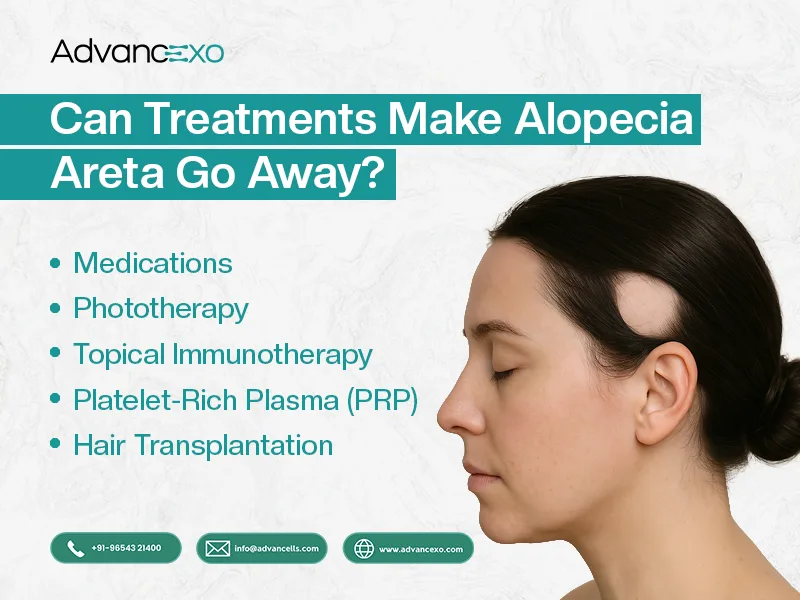
Can Treatments Make Alopecia Areta Go Away?
No, alopecia areta doesn’t go away with conventional treatment approaches. The treatment regimes are more focused on symptom management. The most severe forms (AAT and AAU) are less likely to respond.
The Treatment Regime Includes:
- Medications: Corticosteroids (anti-inflammatory) medication that is injected or prescribed orally. The reaction can be slow or have no effect. The common side effects include weight gain, appetite, mood change, or blurred vision. Minoxidil is a topical drug given for hair loss. Common side effects include scalp irritation, headaches, or unusual hair growth.
- Phototherapy: Dermatologist recommends a combination of UV light and a drug like psoralen ultraviolet A (PUVA) or PUVB
- Topical Immunotherapy: Dermatologist rubs allergens into the affected skin area (contact dermatitis), leading to an allergic reaction that triggers hair growth. Side effects include swollen lymph nodes, scalp irritation, eczema, etc.
- Platelet-Rich Plasma (PRP): Dermatologists use an individual’s own blood. The platelet-rich plasma is isolated and injected into the scalp. PRP is rich in growth factors that stimulate hair growth. However, the quality of growth factors depends on the patient’s health condition
- Hair Transplantation: In most severe hair loss cases, the hair follicles are completely destroyed. Hair transplantation is a surgical procedure that involves hair implantation into the balding area. Limitations of finite donor supply, hair density restriction. An individual with alopecia areta might not produce desirable results
*All the above treatment regimens intend to manage the symptoms. Yet, the approaches are subject to relapse in the hair cycle and inconsistent growth. Controlling inflammation and restoring the hair follicle health is yet to be a challenge.
Exosomes: Tiny Biological Messengers Molecules
The growing research and emerging trends in aesthetics have hyped exosomes as the most-explored innovation as a regenerative approach in hair restoration. These are extracellular, nano-sized (30-150 nm) vesicles released by cells. These tiny messengers have a vital role in cellular communication, promote regeneration, anti-inflammation, and induce repair mechanisms.
Clinicians and researchers are developing non-invasive hair loss solutions by harnessing these tiny molecules.
How Exosomes Help Restore Hair Growth?
In individuals with alopecia areata, exosomes can potentially benefit hair restoration. The key target mechanism includes:
- Hair Follicle Regeneration: Exosomes release growth factors and cytokines that stimulate dormant hair follicles. They trigger natural hair regrowth.
- Induces Anti-Inflammation: Exosomes release various anti-inflammatory cytokines. They neutralize the pro-inflammatory cytokine effect
- Immunomodulation: Exosomes modulate immune response, that is, mitigate autoimmune response, improve cellular communication, and activate hair follicle stem cells
- Minimally Invasive: Exosome therapy is minimally invasive, and it has negligible downtime.
- Combination Approach: Exosomes shouldn’t be mistaken for magic solutions. The combination of exosomes alongside PRP, laser, or microneedling delivers better outcomes [1]
What are the Recommendations for Practitioners?
- Use High-Quality Product: Exosomes efficacy depends on source, isolation procedure, and quality check. Gain a certificate of analysis to ensure efficacy and safety
- Patient Evaluation: All individuals with alopecia arata might not be eligible for exosome therapy. Evaluation of hair loss cause, pattern, scalp health, and medical history must be done.
- Adapt Combinational Approach: Evidence-based outcome suggests better efficacy with combination treatment. Integrating PRP, laser, or microneedling with exosome therapy improves patients’ outcomes.
- Client Education: Set realistic expectations for the client opting for exosome therapy. Thoroughly explains all pros and cons. Ensure clients understand gradual improvement and will require follow-up sessions based on outcome
*Advancexo, India, is a renowned supplier of superior-quality exosomes for hair rejuvenation. The exosomes undergo stringent quality checks before dispatch.
Key Takeaways
The ongoing research has redefined the hair restoration possibility in the coming years. With the development of clinical trials, the efficacy, accessibility, and application are being established. It is laying new hope among individuals experiencing alopecia areata. The integration of exosome therapy with conventional treatment options potentially addresses the root cause of hair loss.
References
Bulgaru-Iliescu AI, Moraru DC, Amarandei AH, Avadanei-Luca S, Constantinescu MC, Rusu AC, Pertea M. Exosome-Based Therapies for Alopecia Areata: A Systematic Review of Clinical and Experimental Evidence. International Journal of Molecular Sciences. 2025 Dec 19;27(1):21.
FAQ’s
Q- What is Alopecia Areata?
Alopecia areata is an autoimmune condition where the immune system of the individuals attacks their own hair follicles. It leads to sudden hair thinning or the appearance of patches.
Q- How to Cure Alopecia Areata?
There is no permanent cure for alopecia areata. The treatment options, including medications, laser, PRP, or hair transplantation, tend to manage the symptoms. Emerging evidence has reflected the efficacy of exosome therapy. Evidence-based practices have reflected synergistic effects with exosome therapy and combination with PRP, microneedling, or laser for better outcomes.
Q- How Do Exosomes Support Hair Rejuvenation?
Exosomes are tiny extracellular vesicles that act as cargo carrying bioactive molecules. This includes proteins, microRNAs, cytokines, and growth factors. Exosomes target dormant hair follicles from within and activate hair follicle stem cells.
Q- What is the Best Treatment for Alopecia Areata?
The best treatment for alopecia areata depends on careful consideration of various factors. This includes hair loss severity, the individual’s response after the treatment, the quality of the product, and the clinical procedure. Individuals opting for treatment must consult experienced practitioners to choose the best treatment.


