
Introduction
Melasma isn’t just a surface-level pigmentation concern- it reflects complex interaction between melanocyte activities, inflammation, skin barrier dysfunction, and sun exposure. Currently, conventional treatment reflects inconsistent results in melasma management. The growing challenge has accelerated interest in advanced regenerative medicine.
Microneedling with exosomes has emerged as a next-generation aesthetic approach that involves controlled skin renewal and repair at the cellular level.
Why Is Pigmentation Difficult to Treat in Melasma?
Melasma is a stubborn skin condition. It is characterized by dark patches or spots on distinct body parts (face, chin, nose, cheeks, forehead). The pigmentation occurs due to a change in the
skin’s layers, especially at the upper and middle skin layers. This leads to excessive melanin production due to melanocyte dysregulation. Research reflects UV exposure, skin ageing, inflammation or increased blood vessel formation as major triggers.
There is no permanent solution to cure melasma. Chemical peels, topical creams, low-frequency laser lights, and sunscreen and protective clothing are established melasma treatment options. These treatments aim to target melanin production, but often fall short due to limited efficacy and subsequent side effects.
To combat such challenges, regenerative technology (exosomes) is widely explored in the aesthetic industry.
What Traditional Treatments are Available for Melasma?
There is no ‘one size fits all’ option available for melasma care. Dermatologists often prescribe combination approaches. Conventional treatment options include:
- Topical Creams: Broad-spectrum sunscreen (>SPF 30) for protection from UVB and UVA. Sunscreen is combined with other topical creams, including tranexamic acid, tretinoin, corticosteroids, hydroquinone, etc.
- Chemical Peels: Exfoliate skin with glycolic acid, salicylic acid, lactic acid, trichloroacetic acid
- Laser-Based Therapies: Use low-fluence Q-switched (LFQS), picosecond laser, and fractional laser
*Dermatologists often recommend a combination of the above approaches for suppressing melanin production.
How has Microneedling Emerged as a Game-Changer?
Microneedling has gained huge interest in effective melasma treatment. The procedure uses tiny needles to create micro-punctures at the target site. The controlled injuries kickstart the repair mechanism. This involves:
- Boost collagen production
- Breaks down excessive melanin at the target site
- Promote repair of the damaged skin layer
- Improve overall skin health
- Microneedling with exosomes introduces regenerative mechanisms and anti-inflammatory support that promote skin healing, balanced pigmentation regulation and boost cellular communication.
- Exosomes are nano-sized extracellular vesicles that boost cellular communication and influence cell behaviour. They regulate cellular and molecular mechanisms and introduce change naturally.
Comparison Between Microneedling vs Microneedling + Exosomes
| Feature | Microneedling | Microneedling + Exosomes |
| Procedure | Creates micro punctures at target site | Creates micro punctures at target site followed by topical exosome application |
| Mechanism | Stimulate skin renewal, boost collagen production, breaks excessive melanin at target site | Delivers various growth factors, cytokines, proteins, and microRNAs. Boost cellular turnover, regulates melanocyte activities |
| Inflammation | Minimal effect (can trigger post-inflammatory darkening) | Significant anti-inflammatory effect, clams skin and reduces underlying inflammation |
| Recovery Time | Moderate pace, redness at microneedling site | Fast recovery, soothes skin post-treatment, quickly reduces redness |
What is the Science Linking Exosomes and Pigmentation Control?
Mesenchymal stem cells (MSCs)-derived exosomes are widely explored, which encourage the skin’s renewal process naturally. They act as a guide for your cells and push them towards better performance [1]. The changes occur from within, that is, improve hydration, collagen and elastin protection, and boost repair mechanisms. The mechanism of action includes:
- Promote Cellular Communication: Exosomes deliver signalling molecules, which boost cellular communication. They modulate cellular behaviour. In melasma treatment, exosomes redirect the skin’s behaviour from melanin over-production to restoration of healthy, balanced tone.
- Modulate Melanin Production: Exosomes influence tyrosinase activities (the major enzyme involved in melanin synthesis). Proteins and miRNAs released by exosomes downregulate tyrosinase activities that slow its overproduction.
- Promotes Skin Regeneration: Melasma have significant skin damage like rough texture, fine lines, and enlarged pores. Exosomes stimulate fibroblast activities, boost collagen and elastin production.
- Anti-Inflammation & Oxidative Stress: Exosomes induce strong anti-inflammatory and antioxidant effects. They release anti-inflammatory molecules (TGF–beta, IL-10) and modulate the effect of pro-inflammatory signals. The cytokines released neutralize the effect of free radicals. Exosomes reduce melasma severity and minimize the chances of relapse.
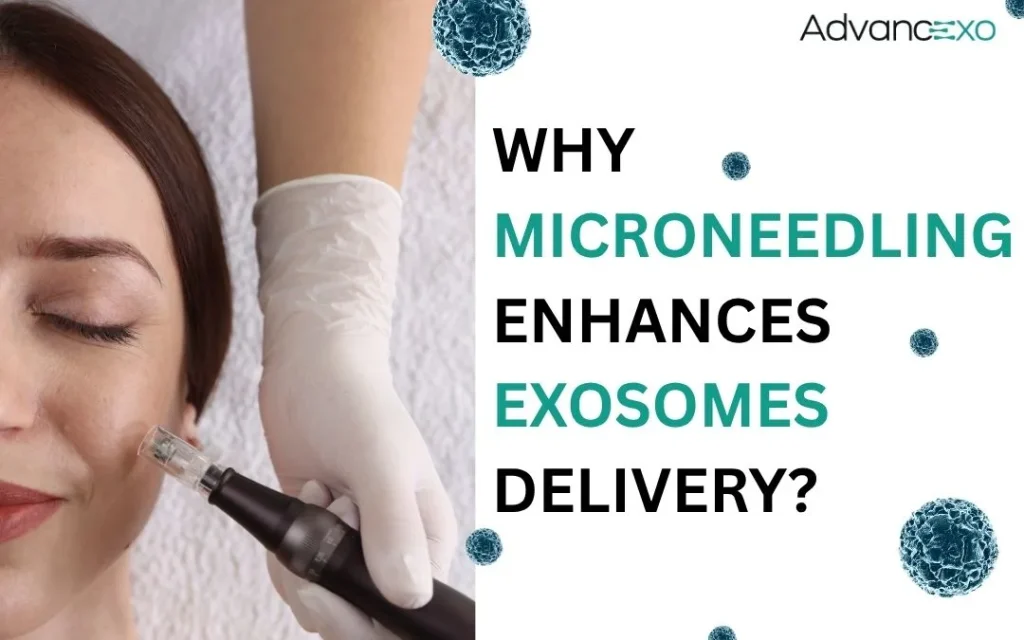
Why Microneedling Enhances Exosome Delivery?
Microneedling with Exosomes Produces Synergistic Effects. This Includes:
- Bypasses the stratum corneum (outer skin layer that keeps foreign substances out). Microneedling punctures the protective layer.
- Microneedling creates tiny punctures or creates microchannels (50 nm to 150 nm). Followed by microneedling, the topical application of exosomes enables deeper penetration. The microchannels allow exosomes to get into deeper skin layers.
- Exosomes are ‘cargo’ carrying 1000s of bioactive molecules. It includes essential proteins, microRNAs, cytokines, and growth factors. When they reach deeper into the skin layer, it accelerates the healing process. They significantly reduce post-treatment redness, inflammation, and downtime.
What are the Key Benefits?
Microneedling with Exosomes has Multifold Benefits, Including:
- Exosomes transform the overall skin tone. It brightens skin gradually and brings a more balanced complexion.
- Improves skin hydration by boosting hyaluronic acid production
- Exosomes stimulate collagen and elastin production, restoring skin elasticity.
- Minimizes the effect of post-inflammatory hyperpigmentation (PIH), which is one of the concerns in melasma patients.
- Suitable for individuals with sensitive skin and skin prone to allergic reactions
What to Expect in the Treatment?
The Procedure Involves a Multi-Step Process:
- Pre-Treatment Consultation: Dermatologist assesses skin health, type of Melasma, severity and overall medical history
- Skin Cleansing: Skin is thoroughly cleansed, removing dirt, makeup or oil
- Microneedling: At the target site, tiny punctures are created
- Exosomes Application: Exosome-rich serum is topically applied and massaged into the skin
- Downtime: The overall procedure takes 45-60 minutes. There is negligible downtime for the procedure. An individual can resume work soon after the treatment
- Aftercare: To gain optimal long-term effect, post-treatment care is crucial
How Microneedling Aftercare Determines Results?
Skin Care After Microneedling plays a vital role in gaining long-term positive outcomes. This includes:
- Avoid intense exercise, sauna, or strenuous activities for 48-72 hours after the treatment
- Avoid the use of any harsh chemical products or heavy makeup.
- Avoid products with active skincare like Vitamin C, retinoids, or other acidic serums
- Direct sun exposure significantly contributes to pigmentation recurrence. Use broad-spectrum sunscreen (<30 SPF) and protective clothing
- Dermatologists recommend the number of sessions based on the individual’s response. Complete all the recommended sessions and follow the microneedling aftercare.
- Adapt skincare setting, keep skin well-hydrated to support better results.
- Prevent post-inflammatory hyperpigmentation
Who Should Avoid Microneedling with Exosomes?
Preclinical and clinical trial results reflected the safety and tolerance of exosomes. There are certain considerations, including:
- Individuals with skin infections like cold sores, inflammatory acne, and open wounds
- Pregnant or lactating women
- Individuals with blood or clotting disorders, such as haemophilia
- Individuals with autoimmune conditions like lupus
What are the Key Considerations?
- Consult an experienced dermatologist and choose a renowned clinic for the treatment.
- Make sure to procure superior-quality exosomes for the best and long-term outcome.
- Follow the microneedling aftercare instructions thoroughly.
*Advancexo, India, is a leading superior quality exosome supplier for skin and hair rejuvenation. The product goes through a stringent quality check process before its dispatch.
Conclusion
Microneedling With Exosomes is a promising modern care solution against Melasma. The procedure is a low-risk option for melasma treatment when performed by experienced professionals. Post Microneedling Care plays a crucial role in obtaining optimal long-term results. The changes occur naturally and produce long-term effective results with a lower risk of recurrence.
References
- Nahm WJ, Nikas C, Goldust M, Horneck N, Cervantes JA, Burshtein J, Tsoukas M. Exosomes in Dermatology: A Comprehensive Review of Current Applications, Clinical Evidence, and Future Directions. International Journal of Dermatology. 2025 Nov;64(11):1995-2010.
FAQ’s
Q- How Long Does it Take to See Results After Microneedling with Exosomes?
The initial glow and texture appear in 1-2 weeks. The changes occur naturally, and exosomes accelerate the healing process. Body boost collagen and elastin production in 4 to 12 weeks.
Q- Is Microneedling with Exosomes Painful?
The procedure isn’t painful. A dermatologist applies localized numbing cream (topical anesthetic) before the microneedling procedure. During the procedure, individuals might feel a light scratchy sensation.
Q- Can Melasma Return After Exosome Treatment?
Melasma recurrence is a common issue in the effective treatment process. Exosomes are highly effective; they repair skin damage, reduce inflammation, and regulate melanin production. The recurrence rate in comparison with conventional treatment is lower. The recurrence can occur due to hormonal fluctuation, inflammation or direct sun exposure.


Your explanation of how melasma involves more than just surface pigmentation really highlights why traditional treatments often fall short. The section on microneedling enhancing exosome delivery into the deeper skin layers offers a compelling logic for why this combination works better for stubborn cases. It’s refreshing to see an article that emphasizes aftercare as a critical factor in maintaining these results.
Thankyou for your comment. Exosomes works from within. The best outcomes comes when combined with microneedling. However, we always recommend to consult an experienced dermatologist before choosing any treatment. The approach can vary based on your problem, severity, skin type, and health condition. Please contact us via WhatsApp or call us at +91-9654321400, or mail us on info@advancells.com for more information. We’re here to support you every step of the way.
The insight regarding how melasma involves more than just surface pigmentation, but rather a complex interplay of inflammation and barrier dysfunction, was particularly eye-opening. This article clarifies why traditional methods often struggle and effectively highlights the advantage of using exosomes to facilitate cellular-level repair and renewal.
Glad that you liked our blog. For any skin rejuvenation needs reach out at:https://advancexo.com/
Pingback: Exosomes for Skin: The Rise of Regenerative Aesthetic Care