
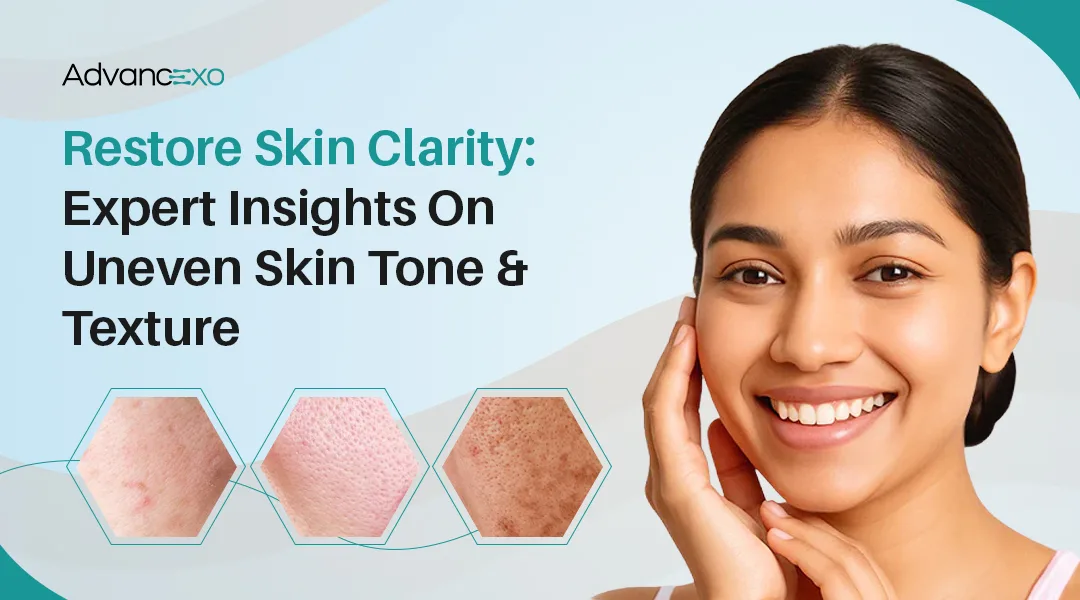
Your skin depicts the story that often goes unheard. Even-toned and luminous complexion reflects healthy skin. However, the appearance of dull or uneven toned skin indicates skin problems. Uneven skin tone often appears due to periodic UV exposure, environmental stressors, hormonal fluctuations, post-acne pigmentation, or intrinsic aging take a toll on skin quality. Skin clarity gets compromised, leading to uneven skin tone, visible discoloration, or dullness.
With the evolution of aesthetic dermatology, the focus has nowadays moved beyond lightening pigmentation. The focus is on restoration of the overall skin quality, targeted skin brightening, and skin rejuvenation. The intent is to target the root cause rather than masking the problem. As a result, one gains enhanced skin radiance, smoother texture, and naturally balanced skin.
The current article uncovers various causes of Uneven Skin Tone and enlightens various dermatological solutions to combat the issue.
Why Does Skin Tone Become Uneven?
Even skin tone is a hallmark of healthy, and well-functioning skin. It reflects uniform melanin production, a resilient skin barrier, and well-functioning skin. Compromised skin health indicates cumulative sun damage, low-profile chronic inflammation, or impaired skin regeneration.
In the majority of cases, patchy appearance is caused by melanocyte dysregulation leading to uneven melanin production. The condition can appear in the face, neck, chest, arms, or other sun-exposed areas. An in-depth understanding of uneven skin tone and texture is crucial for opting for an effective solution.
- Uneven Skin Tone: Patchy appearance, dark spots, blotchiness, dullness, etc. Excessive melanin production occurs at distinct sites. Common triggers including sun damage or inflammation
- Uneven Skin Texture: Indicates skin’s surface quality and feel. Common signs include enlarged pores, acne scars, roughness, bumps, or fine lines. The underlying cause involves collagen or elastin loss, intrinsic aging, or dehydration
What are the Common Signs of Uneven Skin Tone?
- Hyperpigmentation or Dark Spots
- Post-acne marks
- Redness and blotchy skin
- Sun spots/Tanning
- Dull-looking complexion
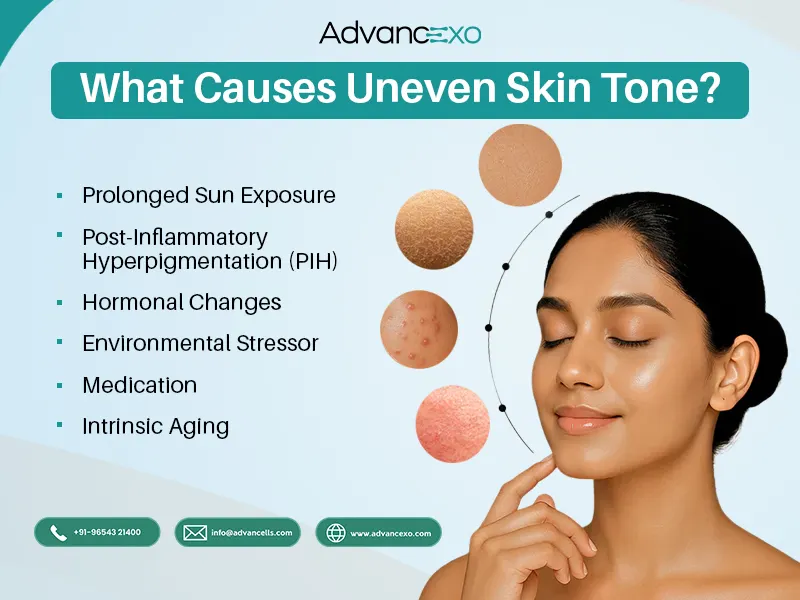
Causes Uneven Skin Tone
- Prolonged Sun Exposure: Regular sun exposure leads to continuous UV exposure. It triggers melanocyte dysregulation, leading to melanin overproduction. Gradually, it leads to tanning, sunspots, patchy skin, etc.
- Post-Inflammatory Hyperpigmentation (PIH): Skin responds to skin inflammation conditions like acne, burns, eczema, etc. It leads to excessive pigmentation production on specific spots. The marks appear as black, bluish-brown, or grayish patches. The condition is marked as melasma.
- Hormonal Changes: Hormonal fluctuation due to various conditions like pregnancy, menopause, thyroid overproduction, the effect of oral contraceptives, etc stimulates melanocyte activities. It leads to conditions like melasma, where symmetrical patches appear on different body parts, most often on the cheeks, chin, forehead, nose, or upper lip
- Environmental Stressor: Continuous exposure to environmental pollutants, stress, insomnia, or nutritional deficiencies leads to oxidative stress. It results in compromised skin texture, dark spots, dullness, etc.
- Medication: Uneven skin tone can appear due to side effects of various medications. The effect of photosensitizing drugs, chemotherapeutic agents, or hormonal therapies triggers pigmentation
- Intrinsic Aging: Aging leads to the accumulation of damaged skin cells. The skin regeneration is compromised, leading to loss of natural radiance
What are Professional Skin Brightening Treatments Available?
Skin Brightening Treatment recommended by a dermatologist depends on the specific cause and suitability. Various dermatological management includes:
Topical Treatments
- Vitamin C, a rich source of antioxidants, inhibits tyrosinase
- Niacinamide (B3) reduces melanin transfer from melanocytes to the skin
- Kojic acid inhibits tyrosinase
- Retinol (Vitamin A) boosts skin turnover
Peels
- Superficial peels use Glycolic, lactic, or salicylic acid to exfoliate the top layer of the skin
- Medium peel implies TCA or AHA. Effective for acne scars or age spots
- Deep peels use phenol. They penetrated deeper skin layers
Laser/Light-Based Therapies
- Laser resurfacing uses ablative CO2 or erbium-doped aluminum garnet
- Light energy converts to heat or shockwaves that shatter pigment clusters
- Accumulated pigment clusters are eliminated
Microneedling
- Involves the creation of controlled punctures on the skin surface
- Stimulates collagen production
- Regulates melanocyte activities
Skin Rejuvenation Treatments
- Exosomes application on target area
- Boost cellular communication
- Promote naive cell regeneration, boost cellular repair
- Improvement in skin tone and texture
Why is Regenerative Medicine Gaining Attention?
In the past decade, regenerative medicine has caught the attention of both dermatologists and candidates seeking natural long-term solutions. Exosomes for skin rejuvenation treatment have become a popular choice in the aesthetic industry. Exosomes act as cargo-carrying bioactive molecules such as proteins, microRNAs, cytokines, and growth factors. They address the root cause of the problem. The mechanism involves:
- Melanin Regulation: Exosomes deliver specific microRNAs (miR-181a-5p). They inhibit tyrosinase (the primary enzyme in melanin synthesis) and downregulates melanogenesis pathways. The signaling molecules, including cytokines and growth factors, deliver calming signals to hyperactive melanocytes. It limits excessive melanin production
- Anti-Inflammation: Exosomes release various anti-inflammatory molecules (IL-6, IL-10) that neutralize pro-inflammatory signals. They modulate the immune response. They mitigate the challenge of PIH
- Vascular Repair: Exosomes diffuse redness or uneven tone due to damaged blood vessels. Exosomes release various growth factors (VEGF, FGF) that promote the formation of naive blood vessels. Exosomes restore microcirculation
- Cellular Turnover: Exosomes reconstruct keratinocytes and fibroblast activities. They boost overall skin cell turnover, enabling evenly pigmented skin with improved texture
How to Choose the Best Treatment?
Choosing the Best Treatment for Uneven Skin Tone involves consideration of specific factors:
- Consult an experienced dermatologist in a renowned aesthetic clinic
- Consideration of skin type, pigmentation depth, and age
- Consideration of pigmentation causes
- Development of a personalized plan based on the individual’s needs
- Opting for an exosomes application requires using clinical-grade exosomes
*Advancexo, India, is a leading supplier of clinical-grade exosomes for skin and hair rejuvenation. The product undergoes stringent quality checks. It comes with Centrification of Authentication (CoA)
Conclusion
Skin Tone Improvement depends on understanding the cause of uneven skin tone. Gaining even complexion requires a combination approach. This involves protection from the sun or environmental stressors and choosing adequate dermatological treatment. Skin Rejuvenation Treatment with exosome therapy is best suited for candidates looking for natural long-term solutions. It is crucial to understand that regenerative medicine is still evolving; opting for exosome application must be done under expert supervision.
FAQ’s
Q- What is the Most Effective Treatment for Uneven Skin Tone?
Choosing the best treatment for uneven skin tone requires unveiling the underlying cause of discoloration. Various dermatological approaches, including topical skin care, peels, laser resurfacing, microneedling, or exosome application, are available.
Q- Can Uneven Skin Tone be Improved Naturally?
Yes, using high SPF (>50 SPF+++) regularly, avoiding environmental stressor exposure, maintaining hydration, adequate exfoliation, and nutritional support can improve skin tone and texture. However, some pigmentation can be deep-rooted in skin layers. In such a situation, a recommendation from a dermatologist is essential.
Q- How Long Does it Take to Improve Uneven Skin Tone?
Visible improvement can appear in weeks to a few months. The outcome depends on the cause or stubbornness of uneven skin tone and texture. The treatment outcome also depends on the type of recommended approach.
Q- What Causes Uneven Skin Tone Even if I don’t Have Acne?
Uneven skin tone can appear due to various reasons. This includes exposure to UV radiation, pollutants, toxins, hormonal fluctuations, low-grade chronic inflammation, genetics, or medical conditions. Identification of the root cause is key in selecting adequate Treatment.


I don’t even know how I ended up here, but I thought this post was good.
I don’t know who you are but definitely you are going to
a famous blogger if you are not already 😉 Cheers!
Thanks for your appreciation. In case of any skin rejuvenation queries, For more information you may visit our website: https://advancexo.com/ For detailed information contact us via WhatsApp or call us at +91-9654321400, or mail us on info@advancells.com for more information. We’re here to support you every step of the way.
Pingback: Exosomes for Uneven Skin Tone: Skin Tone Correction
Pingback: Better Skin Texture: Role of Exosomes in Skin Rejuvenation