
Your Skin Looks Fine. But It Doesn’t Feel Fine. Wired but True.
Healthy-looking skin is often confused with radiance, but glow alone doesn’t define skin quality. One’s complexion can appear brighter under good light or with makeup. But the skin can still feel rough, textured, and uneven with touch. In the modern aesthetic world, gaining smooth skin texture has become the primary goal.
Uneven skin texture develops with tiny bumps, enlarged pores, dry patches, dead skin buildup or post-acne irregularities over time. Gradually, the collagen production depletes with environmental stressor exposure and ageing. Understanding Uneven Skin Texture causes is the first step towards choosing the right approach for long-term skin texture improvement. The current article explores the cause of skin texture change, recognise the hidden signs and unveil evidence-based solutions that meet modern day aesthetic routine.
What’s Really Changing Beneath the Surface?
Rough skin texture isn’t to be blamed every time alone. Visual irregularities with a few bumps aren’t just the problem. Common signs appear as rough texture when touching the face, dull appearance, enlarged-looking pores, or patchy appearance. In fact, in regions with a topical and diverse climate, the condition worsens with humidity, clogged pores, or flaky skin buildup.
The Cause of Uneven Skin Texture Includes:
- Slower Skin Turnover: With aging, skin’s natural barrier cycle slows, leading to accumulation of dead skin on the surface. The buildup makes skin uneven, bumpy, and rough.
- Collagen Fragmentation: Collagen maintains skin’s smooth texture and firmness. Factors such as ageing, UV exposure, environmental pollutants, etc. break down collagen fibers. It results in enlarged pores and fine lines.
- Barrier Dysfunction: Weakened skin barrier loses hydration. The skin becomes prone to dehydration, dryness, sensitivity, and rough skin.
- Environmental Ageing: Regular exposure to sun, pollutants, and oxidative stress accelerates skin ageing by damaging collagen, elastin, and skin cells. With time, visible texture irregularities appear.
- Post-Acne Skin Remodelling: with healing acne, skin undergoes remodelling. The original structure might not get restored every time, resulting in persistent skin irregularities.
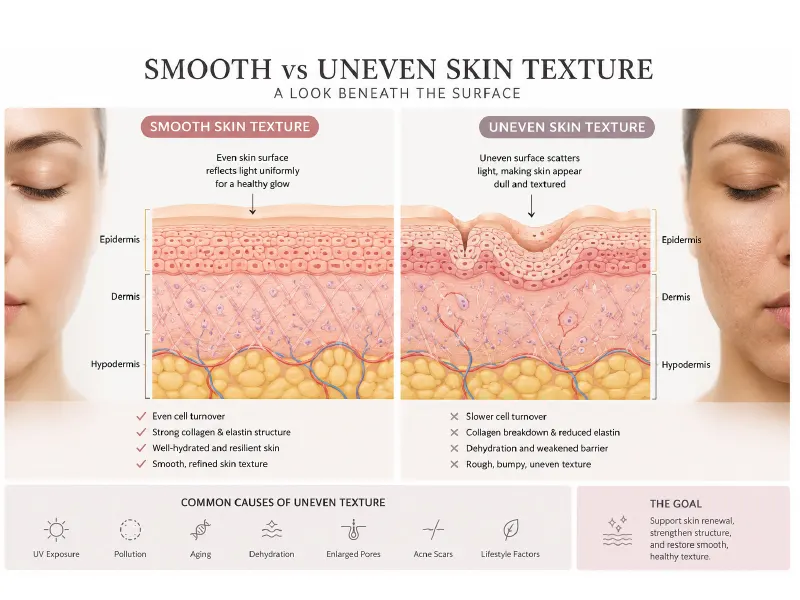
Cross-Sectional Illustration Comparing Smooth vs Uneven Skin Texture.
Not All Uneven Skin Texture Looks the Same
Uneven Skin Texture is Led by Distinct Complications
| Texture Concern | Visual Appearance | Common Cause |
| Rough patches | Dry, flaky skin | Barrier Damage |
| Enlarged pores | Orange-peel like appearance | Oil and Collagen Loss |
| Acne marks | Uneven surface | Scar remodelling |
| Fine bumps | Tiny raised bumps | Clogging or congested pores |
| Crepey texture | Skin thinning, again skin | Depleted collagen production |
Why Your Skincare Routine May Have Hit A Plateau
It is common when your trusted skincare products don’t deliver desirable improvement. The skin might look hydrated after application but gets less refined day by day. This is an early indication that the skin needs additional support beyond topical products.
Surface Hydration vs Structural Repair
The majority of the marketed skincare products are suitable for topical application. The major ingredients include hyaluronic acid, glycerin, ceramides, etc., which replenish skin moisture and strengthen the skin barrier. However, certain concerns like enlarged pores, acne scars, or age-associated roughness do not go away with these skincare routines. The disruption of skin architecture requires strategies that can potentially address the root cause of skin problems
Why Does Exfoliation Alone Fail
Exfoliation is an effective way of removing dead skin from the skin surface. However, over-exfoliation leads to irreversible collagen damage. It weakens the skin barrier, causes skin irritation, and increases sensitivity and dryness.
Where Topical Products Fall Short
Topical skincare products combat problems at the surface level. The ingredients specifically act within the superficial layer. They do not penetrate enough into the skin surface to influence the biological process, like fibroblast activity modulation. This is crucial for collagen and elastin remodeling, which is crucial for smooth skin texture.
How Does Skin Resurfacing Aid in Skin Texture Improvement?
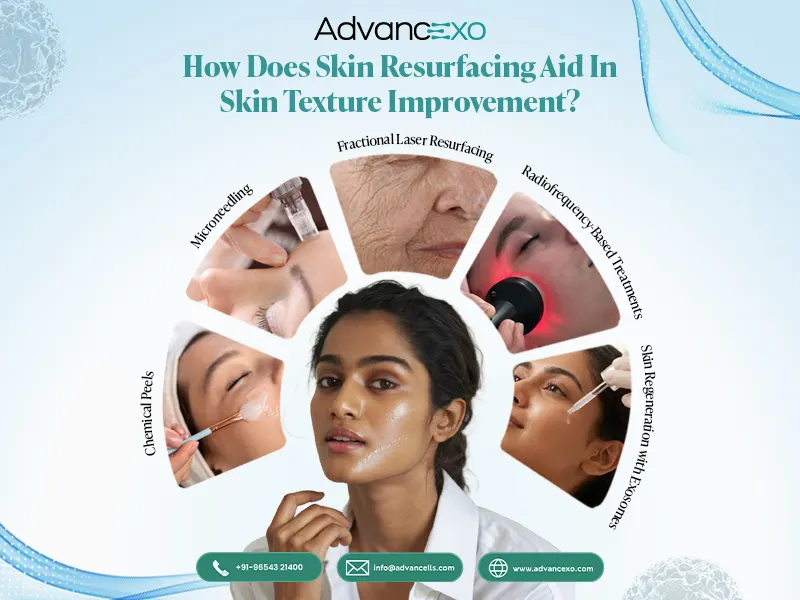
Skin Resurfacing Treatment helps address the problem of Rough Skin Texture. The modern aesthetic procedure not only removes the damaged skin layer but triggers the skin’s natural repair mechanism. It encourages collagen and elastin production, resulting in healthier skin. Common modern-day skin resurfacing treatment modalities include:
Chemical Peels
- Introduced at a level depending on the problem, E.g: Light peel (outer epidermis), medium peel (dermis), deep peel (deeper dermis layer)
- Improves rough skin texture, removes superficial acne marks, pigmentation, and fine lines
- Common ingredients include glycolic acid, lactic acid, salicylic acid, TCA, AHAs, etc.
Microneedling
- Creates controlled micro injuries on the skin
- Stimulates collagen remodelling and boosts the body’s natural healing potential
- Improves enlarged pores, acne scars, and skin aging signs
Fractional Laser Resurfacing
- Delivers microscopic columns of laser energy at the target site
- Targeted approach boosts collagen production and promote skin renewal
- Address deeper textural concerns, wrinkles, acne scare, photodamaged skin
Radiofrequency (RF)-Based Treatments
- Introduces controlled heat energy at targeted site
- Stimulates collagen remodelling into deeper skin layer
- RF microneedling technique combines mechanical stimulation with thermal energy
- Improve skin firmness and pore appearance, delivers Smooth Skin Texture
Skin Regeneration with Exosomes
- Exosomes, nano-sized (30-150 nm) extracellular vesicles released by stem cells
- Acts as cargo for carrying concentrated bioactive molecules
- Induces regenerative capacity, boost repair mechanism, anti-inflammation and immunomodulation
*NOTE: Dermatologists are inclined towards combining regenerative technology with other techniques to boost the natural healing environment and gain better outcomes
Why Is Regenerative Aesthetics Changing the Conversation?
Exosomes efficiently work at the cellular level. These tiny molecules act as postmen inside human systems. They deliver several bioactive molecules including proteins, microRNAs, signalling molecules, lipids, cytokines, and growth factors. They directly target signalling networks and activate repair and regenerative mechanisms. The key benefits include:
- Regeneration and Repair: Releases growth factors and cytokines, promotes cellular communication. Triggers the body’s natural healing mechanism.
- Anti-Ageing: Exosomes trigger collagen and elastin production, soften fine lines and wrinkles, and develop smoother skin texture.
- Combats Pollution and Sun Damage: Exosomes neutralize oxidative stress and repair skin damage from within.
- Skin Texture and Glow: Improves hydration, smoothness, and radiance. Combats underlying low-grade inflammation.
- Boost Healing: Exosome application combined with other techniques like laser, peels, or microneedling clams skin and reduces downtime. It boosts healing, resulting in improved skin texture.
*NOTE: The quality of the exosomes and administration procedure plays a crucial role in the outcome. Advancexo, India, is a leading supplier of clinical-grade exosomes for skin rejuvenation. The product comes with a Certificate of Authentication (CoA).
Aftercare: Maintenance of smooth skin
- Regular use of high SPF (>50+++) sunscreen
- Use protective clothing, avoid direct sun or heat exposure
- Use mild moisturizer with barrier-supporting ingredients
- Maintain skin hydration, avoid active ingredients like retinoids, AHAs, BHAs, etc. for atleast 7-10 days
Conclusion
Uneven skin texture is a baseline skin problem faced by many. Dermatologists focus on adapting wholesome strategies involving regenerative approaches with conventional treatment. Besides, exosome applications have gained scientific interest in aesthetic care. This enables moving beyond surface-level improvement and gaining smoother skin.
FAQ’s
Q- What Causes Uneven Skin Texture?
Sun damage, acne scars, dry skin, enlarged pores, reduced collagen or elastin production, etc. cause uneven skin texture.
Q- What is the Best Skin Resurfacing Treatment?
Dermatologists recommend skin resurfacing on the basis of cause and the intensity of rough skin texture. Options include peels, laser, microneedling, and radiofrequency treatment. Often, these options are combined with exosome application for a better outcome and smoother recovery.
Q- Do Exosomes Help Improve Skin Texture?
Exosomes are cargo for delivering active bioactive molecules. They stimulate skin repair at the cellular level. They boost collagen and elastin remodeling, reduce inflammation, modulate immune response, and boost the body’s natural healing mechanism. It enables the gain of a smooth skin texture.


Pingback: Exosomes for Uneven Skin Tone: Skin Tone Correction
Pingback: Better Skin Texture: Role of Exosomes in Skin Rejuvenation